When most people picture the White House, they do not think about mortar joints, sandstone, symmetry, or the way a curved portico softens a powerful facade. They picture authority. Ceremony. History. That is exactly why white house exteriors are so fascinating: they are not just the outside of a famous building, but the visual language of the American presidency itself.
Look a little closer, though, and the story gets even better. The White House exterior is a blend of practical construction, European influence, political symbolism, careful rebuilding, and landscape design that has evolved over more than two centuries. From Aquia Creek sandstone walls painted white to the instantly recognizable North and South Porticos, every exterior detail has a reason for being there.
For homeowners, designers, history lovers, and architecture fans, this topic matters because the White House shows how curb appeal and meaning can live in the same structure. It is elegant without being showy, formal without feeling cold, and grand without losing the sense that it is still, somehow, a home. That balance is hard to achieve, and it is one reason the building remains one of the most studied residences in the world.
Why white house exteriors matter
The exterior of the White House does more than make a first impression. It signals stability, continuity, and national identity. For generations of Americans, the building’s outside appearance has been tied to major public moments: state arrivals, inaugural traditions, press photography, protest backdrops, and holiday imagery. In reality, its power comes from consistency. While administrations change, the outward image remains reassuringly familiar.
That is part of what makes white house exteriors such a strong subject for architecture and design study. The building’s facade is not flashy. It does not rely on trend-driven materials, oversized ornament, or dramatic color shifts. Instead, it leans on proportion, restraint, and a calm sense of order. Those qualities are classic hallmarks of architecture that lasts.
There is also an emotional layer here. People often describe the White House as “iconic,” but that word can feel thin unless you unpack it. What makes it iconic is repetition plus meaning. Children see it in textbooks. Adults see it in news footage. Tourists photograph it from Lafayette Square or the South Grounds. Over time, the exterior becomes more than architecture; it becomes memory.
The architectural style behind the facade
A neoclassical image built for permanence
At its core, the White House is a neoclassical building, shaped by ideals of balance, symmetry, and dignity. James Hoban, the Irish-born architect who won the 1792 design competition, created a presidential residence that reflected classical European influences while serving a distinctly American purpose. That choice was not accidental. Early national leaders wanted public buildings that conveyed seriousness and legitimacy.
Neoclassical architecture tends to favor clean geometry, disciplined ornament, and references to ancient Greek and Roman forms. You can see that influence in the columns, the pediment-like emphasis of the entrances, and the measured proportions of the building’s elevations. However, the White House never feels as heavy as some European palaces. It is stately, but not oppressive. That softer effect is one reason the exterior continues to appeal to modern eyes.
Why symmetry does so much of the work
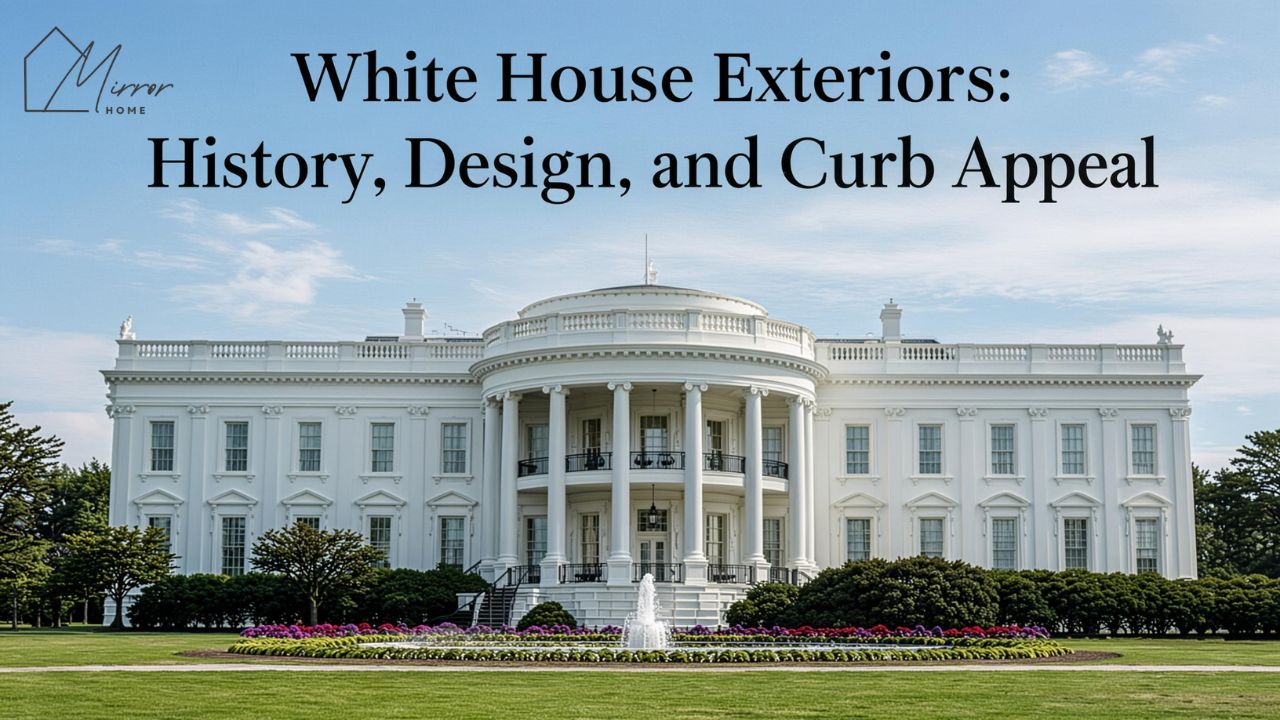
If you strip away the history for a moment and just look at the composition, the White House exterior is a masterclass in symmetry. The facade feels stable because the visual weight is carefully distributed. Windows repeat rhythmically. Porticos anchor the center. The building does not need loud decoration because the proportions already create visual confidence.
This is a lesson designers still use today. A balanced facade tends to feel more expensive, more intentional, and more calming. That is true whether you are looking at a presidential residence or a suburban home. In design psychology, visual order often reads as trustworthiness. The White House proves that point beautifully.
The influence of James Hoban
Hoban’s role matters because he gave the building its fundamental architectural DNA. The White House Historical Association identifies him as the architect of the White House and notes that he won the original design competition in 1792. His work established the framework that later additions had to respect, which is why even after fires, reconstructions, and renovations, the exterior still feels coherent.
That continuity is easy to underestimate. Many historic buildings become awkward after decades of changes. The White House avoided that trap by preserving its exterior character even when major internal work became unavoidable. The result is a structure that feels both historic and visually unified.
Key exterior features that define the White House
The North Portico
For many people, the North Portico is the image that first comes to mind. This is the formal public-facing entrance, the one most associated with ceremonial arrivals and official greetings. The North Portico was added in 1829–1830, giving the building a more stately front entrance and strengthening the symmetry between the north and south elevations.
Architecturally, it does several jobs at once. It creates shelter. It dramatizes the entrance. It adds depth and shadow to what would otherwise be a flatter facade. Most importantly, it turns approach into experience. A guest does not simply walk into the house; they ascend into it. That sense of procession is a classic exterior design move, and here it is executed with extraordinary control.
The South Portico
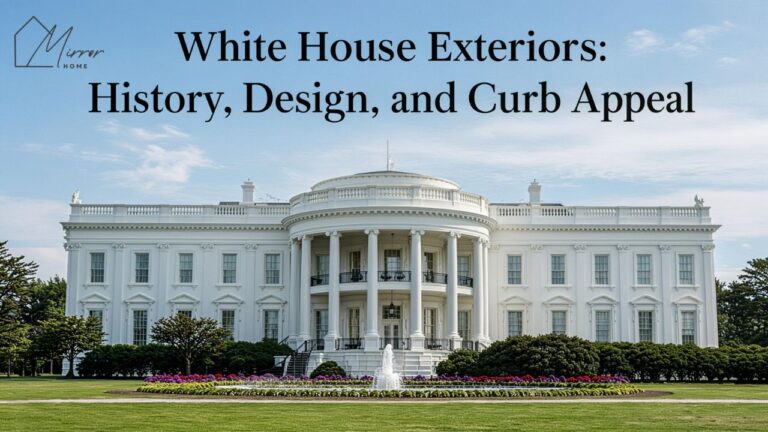
If the North Portico feels formal and public, the South Portico feels more graceful and scenic. Completed in 1824 during James Monroe’s administration, the curved South Portico gave visual focus to the long south elevation and created a terrace-like outdoor extension for the state parlors. Its sweeping staircases and semicircular form make it one of the most elegant parts of the building.
This is one of the reasons white house exteriors are so often admired even by people who know little about architecture. The South Portico softens the rigidity of the rectangular main block. It brings motion into the design. Instead of feeling flat or severe, the building suddenly feels social, almost theatrical, especially when viewed across the South Lawn.
Columns, windows, and disciplined ornament
Columns are among the most recognizable details on the White House exterior, but their impact depends on restraint. They are not overloaded with decoration. They frame rather than overwhelm. The windows, too, are part of the story. Their consistent spacing helps preserve rhythm across the facade, while shutters and trim sharpen contrast against the white-painted exterior.
One reason the building photographs so well is this controlled repetition. Repeated architectural elements create visual harmony. That harmony, in turn, makes even a large building feel readable at a glance. Good exteriors do that. They simplify complexity without becoming dull.
Roofline and scale
The roofline of the White House is relatively restrained compared with many monumental buildings. That helps keep the residence from feeling top-heavy. The scale is impressive, but the building does not scream. According to the official White House overview, the residence contains 132 rooms, 35 bathrooms, 147 windows, and six levels, facts that remind us how much larger and more complex the property is than its calm exterior first suggests.
That contrast is part of the magic. From a distance, the White House exterior appears composed and almost modest. In reality, it is a carefully managed composition hiding immense logistical complexity.
Materials, paint, and construction details
What the White House exterior is made of
A surprising number of people assume the White House is made of white marble. It is not. National Park Service material identifies the exterior walls as sandstone from Aquia Creek, Virginia, painted white. That single fact changes how you look at the building. What appears bright, polished, and almost permanent is actually the result of material choice plus maintenance.
Aquia sandstone was used in several prominent early American buildings, but it is relatively soft compared with harder stones used in later monumental architecture. That softness helps explain why protective finishes and preservation work have mattered so much over time. The exterior look is timeless, yes, but it is also actively maintained.
Why it is painted white
There is a myth that the White House was painted white to cover burn marks after the British attack of 1814. The historical picture is more complicated. The building’s exterior sandstone was painted white, and the tradition of maintaining that white finish became part of its identity. After the 1814 fire, only the exterior sandstone walls and interior brickwork remained, and reconstruction began under Hoban’s supervision in 1815.
That white finish does more than create a memorable name. It protects the stone and visually unifies the structure. It also amplifies contrast with the green grounds, blue sky, and dark window openings. In branding terms, it is almost perfect: unmistakable, simple, and emotionally loaded.
The famous paint statistic
One of the most cited details about the building is that the White House requires 570 gallons of paint to cover its outside surface. That number is more than a fun trivia point. It tells you something practical about exterior care at this scale. A building this visible cannot afford neglect. Even tiny surface inconsistencies would be noticed in photographs seen around the world.
For homeowners, that is a useful reminder. Great exteriors are not created once and left alone forever. They stay beautiful through maintenance, repainting, inspection, and thoughtful restoration. The White House just happens to do that under the most intense visual scrutiny imaginable.
Masonry, restoration, and preservation
Because the structure is both a residence and a national symbol, restoration has to balance authenticity with durability. Preservation specialists have documented efforts to restore original stone and continue stonemasonry traditions while using modern tools and materials where necessary. That balancing act is common in historic preservation: preserve what matters visually and materially, but do not romanticize decay.
In other words, white house exteriors look effortless only because a lot of expertise sits behind that appearance.
The grounds, gardens, and landscape design
The exterior is bigger than the building
When people talk about the White House exterior, they often mean the mansion itself. But the full exterior experience includes the lawns, pathways, fountains, trees, and ceremonial open space around it. The White House Historical Association notes that the history of the grounds reaches back well before the mansion’s construction, and that long landscape story helps explain why the site feels so established today.
This matters because architecture rarely works in isolation. A beautiful facade can look awkward if the landscape fights it. The White House avoids that problem through expansive lawns, controlled sightlines, and a careful relationship between building and open space. The structure stands out, but it also breathes.
The North view versus the South view
The north side is civic and ceremonial. It faces public approach, formal arrival, and the image many people associate with official Washington. The south side, by contrast, feels more open and picturesque, thanks to the broad lawn, fountain, and terrace effect created by the South Portico. The two sides express different moods without abandoning a unified style.
That dual personality is one of the smartest things about the property. It lets the residence be both symbolic and livable. One face addresses the nation. The other opens to landscape and air.
Gardens and outdoor prestige
The White House grounds have evolved through many administrations, with major outdoor changes including the modern Rose Garden created during the Kennedy years, according to a White House release discussing the property’s history. Even when gardens change, though, the guiding idea remains consistent: the exterior should support ceremony, beauty, and public memory.
For design lovers, the takeaway is simple. The most memorable exteriors are rarely just about siding, stone, or paint color. They are about how architecture and landscape cooperate.
How the exterior changed over time
Fire, rebuilding, and resilience
The White House exterior has survived events that would have erased many buildings from history. In 1814, British troops burned the White House. The National Park Service states that the exterior sandstone walls and interior brickwork were all that remained. Reconstruction began in 1815, and the house was ready for President James Monroe in 1817.
That episode changed the meaning of the building. After destruction, rebuilding turned the house into a symbol of resilience as much as government. The exterior we admire today is not only elegant. It is also a survivor.
The addition of the porticos
The original 1792 design did not include the North and South Porticos in the forms we know today. Those additions came later, with the South Portico completed in 1824 and the North Portico added in 1829–1830. These changes dramatically improved the exterior composition and helped create the iconic silhouette now recognized worldwide.
This is a wonderful reminder that great architecture sometimes becomes great through evolution. The early building was important. The later additions made it unforgettable.
The Truman reconstruction
By the mid-20th century, structural problems inside the White House had become severe. The official White House history explains that President Harry Truman began a total reconstruction in 1948 in which everything but the outer walls was dismantled, and the family returned in 1952.
This is one of the most important facts in understanding white house exteriors. The outside image remained recognizable, but behind that familiar shell, the building had to be fundamentally rebuilt to survive. It is a powerful example of how preservation sometimes means saving character rather than freezing every internal element in place.
Exterior continuity as national strategy
That said, keeping the outside visually consistent was not just an aesthetic choice. It was a public one. The White House had become too symbolically important to look radically different from one generation to the next. Exterior continuity helped preserve national trust, historical memory, and the building’s role in civic imagery.
Design lessons homeowners can borrow
1. Use symmetry to create instant polish
The White House shows how symmetry can make a home feel calm and intentional. You do not need a mansion to apply this. Matching light fixtures, balanced landscaping, evenly spaced shutters, and a centered entry can dramatically improve curb appeal.
2. Let one focal feature lead
On the White House, the porticos do a lot of the visual heavy lifting. On a regular home, that focal point might be a porch, arched doorway, statement lanterns, or a bold front door. The lesson is not “copy the White House.” The lesson is “give the eye somewhere confident to land.”
3. Choose restraint over clutter
One reason the White House exterior feels sophisticated is that it is edited. There are details, but not chaos. Too many materials, too many trim styles, or too many decorative accents can dilute a facade fast. Simplicity often wins.
4. Make landscape part of the architecture
The White House grounds reinforce the building rather than compete with it. At home, that may mean trimming foundation plantings, widening a walkway, adding layered greenery, or improving lawn edges. Exterior design is never just the wall surface.
5. Maintain relentlessly
Paint, stone, trim, steps, lighting, and drainage all affect how an exterior feels. The White House is proof that prestige is partly maintenance. A tired facade rarely feels luxurious, no matter how strong the original design was.
A quick comparison table: what makes the White House exterior work
| Exterior Element | Why It Works | Homeowner Lesson |
|---|---|---|
| Symmetrical facade | Creates balance and calm | Center focal points where possible |
| North Portico | Adds ceremonial entry and depth | Emphasize your front entrance |
| South Portico | Softens the rear elevation with curves | Use porches or terraces to add elegance |
| White-painted stone | Builds instant recognition and contrast | Limit your palette for a cleaner look |
| Large open grounds | Gives the building visual breathing room | Avoid overcrowding the front yard |
| Repeated windows and trim | Establishes rhythm and order | Keep exterior details consistent |
FAQ
What materials are used in white house exteriors?
The White House exterior is made of Aquia Creek sandstone that is painted white. That combination of stone construction and protective white finish is central to the building’s appearance and preservation history.
Why is the White House white?
The exterior sandstone has long been painted white, which both protects the material and gives the residence its instantly recognizable identity. The color became part of the building’s image over time, not just a decorative choice.
How often are white house exteriors maintained?
Official White House information states that about 570 gallons of paint are needed to cover the outside surface. That figure suggests an ongoing, serious maintenance process rather than occasional cosmetic touch-ups.
What is the difference between the North and South Porticos?
The North Portico is the formal public entrance associated with official arrivals, while the South Portico is more scenic and terrace-like, opening toward the South Lawn with a sweeping curved design.
Who designed the White House exterior?
James Hoban, an Irish-born architect, won the 1792 competition to design the White House. His work established the essential exterior character that later additions respected.
Did the White House exterior survive the 1814 fire?
Partially. The National Park Service says the exterior sandstone walls and interior brickwork remained after the British burned the White House in 1814, and reconstruction began in 1815.
Are today’s white house exteriors original?
They are original in visual character, but not entirely untouched. The building underwent a major Truman-era reconstruction from 1948 to 1952 in which everything but the outer walls was dismantled and rebuilt.
What architectural style do white house exteriors reflect?
They reflect neoclassical design, with a strong emphasis on symmetry, columns, proportion, and restrained ornament. That style was chosen to communicate dignity and permanence.
Conclusion
The real genius of white house exteriors is that they manage to feel symbolic and human at the same time. This is a building tied to power, conflict, ceremony, and history, yet its exterior still succeeds on the simplest design terms: balance, clarity, elegance, and care.
That is why the White House remains such a compelling model. Its facade is not memorable because it is loud. It is memorable because it is disciplined. The columns know their role. The porticos shape experience. The white-painted stone gives the structure a visual identity no one confuses with anything else. And the surrounding grounds make sure the house never feels trapped by its own importance.
For anyone studying architecture, curb appeal, landscaping, or historic preservation, white house exteriors offer a lesson that still holds up today: the most enduring design is not usually the most complicated. It is the one that knows exactly what it wants to say, and says it with confidence.