Purple can feel royal, romantic, moody, soft, playful, or dramatic. That range is exactly why so many people get stuck trying to style it. If you have ever asked yourself what color goes with purple, you are not alone.
The tricky part is that purple is not just one shade. Lavender behaves very differently from eggplant. Lilac feels airy and fresh, while deep plum can make a room feel rich and intimate. The right match can make purple look polished and expensive. The wrong one can make it feel heavy, dated, or chaotic.
That is why color pairing matters so much. Whether you are choosing paint, furniture, curtains, cushions, rugs, or even clothing accents, a smart purple palette can completely change the mood of a space.
Why purple is easier to style than most people think
Purple sits between blue and red, which gives it a rare kind of flexibility. It can lean cool, warm, soft, or dramatic depending on the undertone. That means it can work with quiet neutrals like beige and gray, but it can also hold its own beside stronger tones like mustard, emerald, navy, and blush.
In real homes, purple often works best when it is treated like a personality color rather than a background filler. A muted lavender wall, a plum sofa, or a set of violet dining chairs can become the visual anchor of a room. Once you know whether the purple in front of you feels cool or warm, pairing gets much easier.
A simple rule helps here: lighter purples usually look best with airy, gentle colors, while darker purples can handle deeper contrast and richer texture. That is why one person loves purple with white and another swears by purple with gold. Both can be right.
What color goes with purple in different shades
Not every purple tells the same story. Before you choose a partner color, look closely at the shade.
Lavender
Lavender is soft, delicate, and slightly dreamy. It pairs beautifully with:
- White
- Cream
- Pale gray
- Sage green
- Blush pink
- Light wood tones
Lavender is a favorite for bedrooms, nurseries, reading corners, and spring-inspired interiors because it feels clean without looking cold.
Lilac
Lilac has a youthful, cheerful energy. It works well with:
- Soft yellow
- Warm white
- Dusty rose
- Light taupe
- Mint green
Lilac can easily look sweet, so adding a grounding color like taupe or natural oak helps it feel more grown-up.
Violet
Violet is brighter and more saturated. It pairs nicely with:
- Charcoal
- Navy
- Teal
- Crisp white
- Silver
Violet brings energy into a room, so it often works best as an accent rather than the dominant color.
Plum
Plum feels rich and mature. It looks stunning with:
- Beige
- Camel
- Gold
- Olive green
- Soft gray
- Black in small doses
Plum is excellent for elegant spaces because it adds depth without feeling as severe as black.
Eggplant
Eggplant is dark, dramatic, and luxurious. It works with:
- Ivory
- Brass
- Deep green
- Walnut wood
- Greige
- Burgundy for layered richness
This shade loves texture. Velvet, matte paint, linen, leather, and brushed metal all look especially beautiful with it.
What color goes with purple for the safest, easiest results
If you want a combination that works almost every time, start with neutrals. They calm purple down and help it look intentional.
White
White makes purple look fresh, bright, and clean. It is especially good with lavender, lilac, and medium violet tones. In small rooms, white keeps purple from feeling too heavy.
Best for:
- Bedrooms
- Bathrooms
- Small living spaces
- Minimalist decor
Cream and ivory
Cream and ivory soften purple more than bright white does. The result feels warmer and more welcoming. This pairing is perfect when you want elegance without harsh contrast.
Best for:
- Traditional interiors
- Cozy bedrooms
- Classic living rooms
- Soft wedding-inspired palettes
Gray
Gray is one of the most reliable answers to what color goes with purple because it can shift the whole mood. Light gray makes purple feel modern and relaxed. Dark gray gives it drama and edge.
Best for:
- Contemporary homes
- Office spaces
- Upholstery
- Accent walls
Beige and taupe
If purple feels too cool to you, beige and taupe can warm it up. These shades bring balance and make purple easier to live with every day.
Best for:
- Rental-friendly decor
- Family rooms
- Neutral homes that need one statement color
Black
Black can look stunning with purple, but it needs restraint. Too much black with dark purple can make a room feel flat or gloomy. Used in lighting, frames, hardware, or a side chair, it can look sharp and sophisticated.
Bold colors that make purple stand out
Purple does not always need a quiet partner. Sometimes it shines most when it is paired with a confident color.
Green
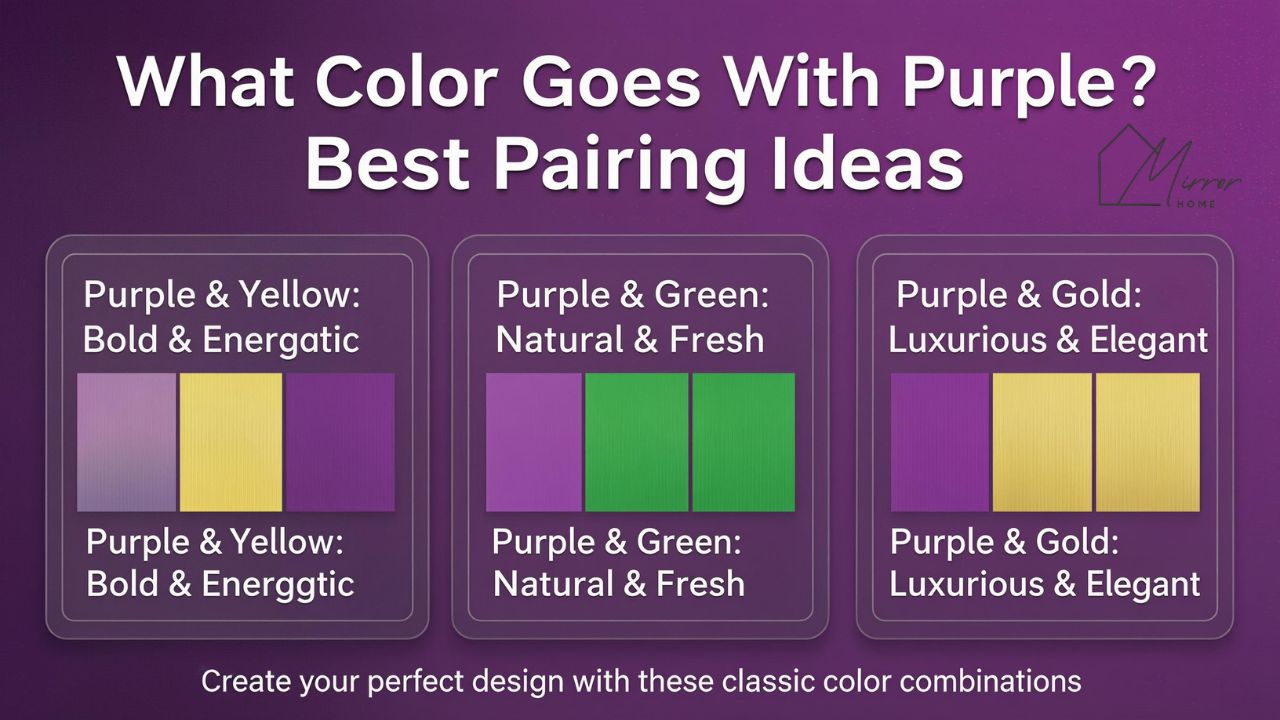
Green and purple are one of nature’s classic combinations. Think of flowers, grapes, lavender fields, and leafy stems. The pairing feels balanced because green naturally grounds purple.
Try:
- Sage with lavender
- Olive with plum
- Emerald with eggplant
- Mint with lilac
This is one of the most versatile pairings for home decor because it can feel earthy, glamorous, or fresh depending on the exact shades.
Yellow and mustard
Yellow sits opposite purple on the color wheel, so the contrast is lively and eye-catching. Bright yellow can feel energetic and playful. Mustard feels deeper, warmer, and more refined.
Try:
- Lilac with pale butter yellow
- Plum with mustard
- Violet with golden accents
This combination works best when one color leads and the other supports.
Pink
Pink and purple can look romantic, layered, and surprisingly chic. The secret is using different intensities. A dusty pink with deep plum feels grown-up. Bubblegum pink with bright violet can feel a bit too loud unless that is the look you want.
Try:
- Lavender with blush
- Plum with rose
- Mauve with berry tones
Blue
Blue and purple create a cool, calming palette. Since purple already contains blue, these shades naturally blend well together.
Try:
- Lavender with powder blue
- Violet with navy
- Eggplant with slate blue
This pairing is excellent for bedrooms, lounges, and stylish offices.
Gold
Gold is not a paint color in the usual sense, but it matters in styling. Purple with gold looks rich, warm, and expensive. Even a few gold touches, like mirrors, lamps, handles, or frames, can lift the entire room.
Image suggestion: A styled living room board showing purple paired with gray, sage, mustard, and gold accents.
Soft and calming combinations for everyday spaces
Not every purple palette needs to be dramatic. Some of the prettiest combinations are quiet and easy to live with.
Purple and sage green
This pairing feels natural, restful, and current. Sage takes the sweetness out of lighter purples and gives them a grounded finish. It is lovely in bedrooms, kitchens, and entryways.
Purple and blush
Blush adds warmth and softness. This duo works well in feminine spaces, but it can also feel elegant in a modern room when paired with clean lines and simple furniture.
Purple and greige
Greige sits between gray and beige, which makes it a brilliant bridge color. It tones purple down without making it dull.
Purple and natural wood
Wood brings texture and warmth. Oak, walnut, and rattan all help purple feel less artificial and more lived-in. This matters a lot when a room already has cool finishes.
What color goes with purple in a living room?
Living rooms need balance because people spend so much time in them. Purple can work here, but placement matters.
For a calm living room
Choose:
- Lavender or dusty purple
- Cream sofa
- Light wood table
- Sage or gray textiles
This creates a relaxed, welcoming feel without becoming too sweet.
For a dramatic living room
Choose:
- Plum or eggplant wall or sofa
- Ivory curtains
- Brass lighting
- Walnut or black accents
This style feels luxurious and grounded.
For a modern living room
Choose:
- Medium purple accent chair or cushions
- Gray sofa
- White walls
- Matte black hardware
That mix keeps things sharp and current.
A good rule is to let purple be the star in one or two places only. A purple couch, rug, and wall all at once can be too much unless the room is very large and professionally layered.
What color goes with purple in a bedroom?
Purple is a natural fit for bedrooms because it can feel soothing, cocooning, and personal.
Best bedroom pairings
| Purple Shade | Best Matching Colors | Mood Created |
|---|---|---|
| Lavender | White, sage, blush | Calm and airy |
| Lilac | Cream, pale gray, oak | Fresh and light |
| Plum | Beige, gold, taupe | Cozy and elegant |
| Eggplant | Ivory, walnut, olive | Deep and luxurious |
| For adults, muted purples often work best. For kids’ rooms, lilac and lavender can feel playful without becoming overwhelming. | ||
| Layering matters more than people think in a bedroom. Even if the walls are purple, neutral bedding and textured throws can stop the room from feeling flat. |
What color goes with purple in kitchens and dining spaces?
Purple is less common in kitchens, which is exactly why it can look memorable.
In kitchens
Use purple carefully:
- Lavender cabinets with brass hardware
- Plum bar stools with white countertops
- Purple accessories with wood shelves
Kitchen spaces usually benefit from clean partners like white, warm gray, light wood, and brushed metal.
In dining rooms
Purple can feel dramatic and inviting, especially in the evening. Deep plum or violet dining chairs with a wood table and soft lighting can look amazing.
This is one place where purple and gold or purple and black can really shine, because dining rooms can handle a bit more mood than kitchens.
What color goes with purple in bathrooms?
Bathrooms are a smart place to experiment because the space is smaller. You can be more playful without committing to an entire house palette.
Best bathroom pairings:
- Lavender and white for a fresh spa feel
- Plum and marble for elegance
- Lilac and silver for a crisp finish
- Purple and sage for a soft organic look
Tiles, towels, wallpaper, and vanity accessories give you room to test purple without repainting every surface.
Using purple with metal finishes and materials
Color is only part of the picture. Finishes matter too.
Brass and gold
These warm metals make purple feel rich and welcoming. Great for plum, eggplant, and violet.
Chrome and silver
These cool finishes sharpen lighter purples and can make them feel cleaner and more modern.
Wood
Wood softens purple and makes it feel more natural. Oak brightens it, walnut deepens it.
Velvet, linen, and leather
Purple looks very different depending on texture. Velvet intensifies its richness. Linen makes it feel relaxed. Leather adds contrast and maturity.
Common mistakes to avoid when styling purple
Purple can be beautiful, but it can also go wrong fast when the mix is not thoughtful.
Using the wrong undertone
A cool lavender with a very warm beige can clash. A warm plum with icy gray may feel off. Always compare undertones before committing.
Pairing too many statement colors
Purple already has presence. Add too many bright partners and the room starts to feel chaotic. Choose one supporting color and let neutrals do the rest.
Forgetting natural light
Purple changes a lot depending on the light source. A shade that looks soft in daylight may look dull or overly blue at night. Test paint swatches on multiple walls first.
Overloading the room
Purple cushions, purple curtains, purple rug, purple wall, and purple art can quickly become too much. Repetition is useful, but it should feel deliberate.
Ignoring texture
Purple often looks better when the room includes different materials. Without texture, the palette can feel flat.
Purple palette ideas you can copy
If you want ready-made inspiration, these combinations are a good place to start.
Soft and airy palette
- Lavender
- White
- Sage
- Natural oak
- Brushed nickel
Warm and elegant palette
- Plum
- Beige
- Camel
- Brass
- Walnut
Modern cool palette
- Violet
- Gray
- White
- Matte black
- Glass accents
Romantic palette
- Lilac
- Blush pink
- Cream
- Light wood
- Soft gold
Moody luxury palette
- Eggplant
- Ivory
- Olive green
- Walnut
- Antique brass
How to choose the right purple pairing for your space
If you are still unsure, use this quick decision guide.
Choose white, cream, or gray if:
- You want something safe
- Your room is small
- You prefer a timeless look
- You already have colorful decor elsewhere
Choose green if:
- You want a balanced, natural palette
- You like organic, earthy rooms
- You want purple to feel calmer
Choose mustard or gold if:
- You want contrast and warmth
- You love bold interiors
- You want a richer, more styled result
Choose pink if:
- You want softness
- You are styling a bedroom or dressing area
- You enjoy layered, romantic tones
Choose blue if:
- You like cool palettes
- You want a restful mood
- You are decorating a bedroom or office
The best answer to what color goes with purple depends on three things: the exact shade of purple, the mood you want, and how much contrast your room can handle.
FAQ
What color goes with purple walls?
White, cream, gray, beige, sage green, and natural wood all work beautifully with purple walls. The best match depends on whether the purple is light, muted, or dark.
What color furniture goes with purple?
Neutral furniture is usually the easiest choice. Cream, gray, beige, taupe, and wood finishes all pair well with purple. For a bolder look, try olive or mustard accents.
Does gray go with purple?
Yes, gray goes very well with purple. Light gray makes purple feel modern and calm, while dark gray adds depth and drama.
What color curtains go with purple walls?
White, ivory, soft gray, taupe, or sage curtains are usually safe and stylish. If the room is dramatic, velvet curtains in a deeper neutral can also work.
Is purple a warm or cool color?
Purple can be both. Shades with more blue lean cool, while shades with more red feel warmer. That is why some purples work better with gray and others look better with beige or gold.
What accent color works best with purple?
Green is one of the strongest accent choices because it balances purple naturally. Gold, blush, mustard, and navy also work well depending on the style.
Can purple work in a modern home?
Absolutely. Purple can look very modern when paired with gray, white, black details, clean lines, and simple textures. Dusty or muted purples often feel most current.
What color rug goes with purple sofa?
A cream, gray, taupe, or muted patterned rug usually works best. If you want more contrast, a rug with hints of olive, blush, or gold can pull the room together.
Conclusion
Purple is far more flexible than it first appears. It can feel soft, earthy, polished, dramatic, or luxurious depending on the colors around it. If you want the simplest route, pair it with white, cream, gray, or taupe. If you want more personality, look at sage green, mustard, blush, navy, or gold.
Once you stop treating purple like a risky color and start treating it like a layered one, the decisions become easier. Test the undertone, watch it in natural light, and build around the mood you want. That is the real secret behind making purple look beautiful instead of confusing.