Introduction
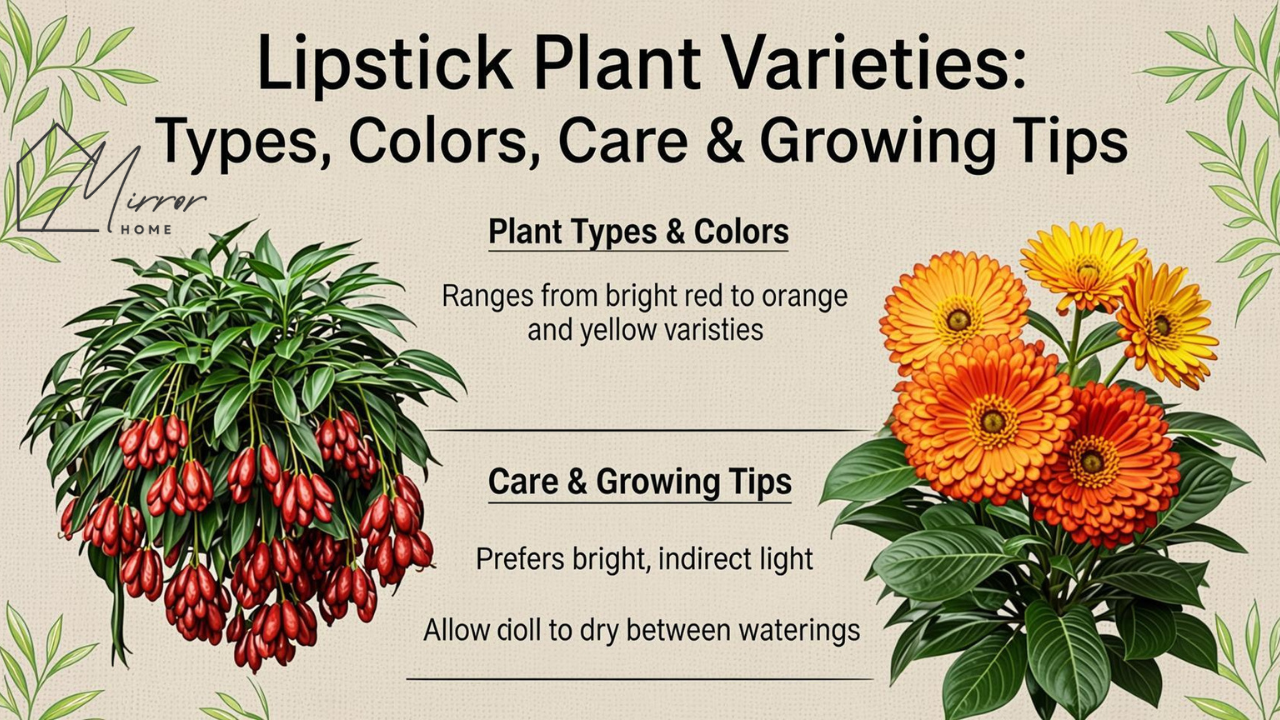
There’s something instantly joyful about a plant that looks like it’s wearing makeup. The moment you see those glossy green leaves and bright, tube-shaped blooms, you understand why lipstick plant varieties have become such a favorite among indoor plant lovers.
In reality, these plants aren’t just pretty faces. They’re surprisingly expressive, offering different flower colors, leaf textures, and growth habits that fit everything from minimalist apartments to lush indoor jungles. If you’ve ever wondered which type suits your space—or why some bloom nonstop while others sulk—this guide is for you.
Beyond aesthetics, lipstick plants are also a lesson in patience and reward. When cared for properly, they flower generously and live for years. That’s why understanding the range of lipstick plant varieties matters more than most people realize.


What Are Lipstick Plant Varieties?
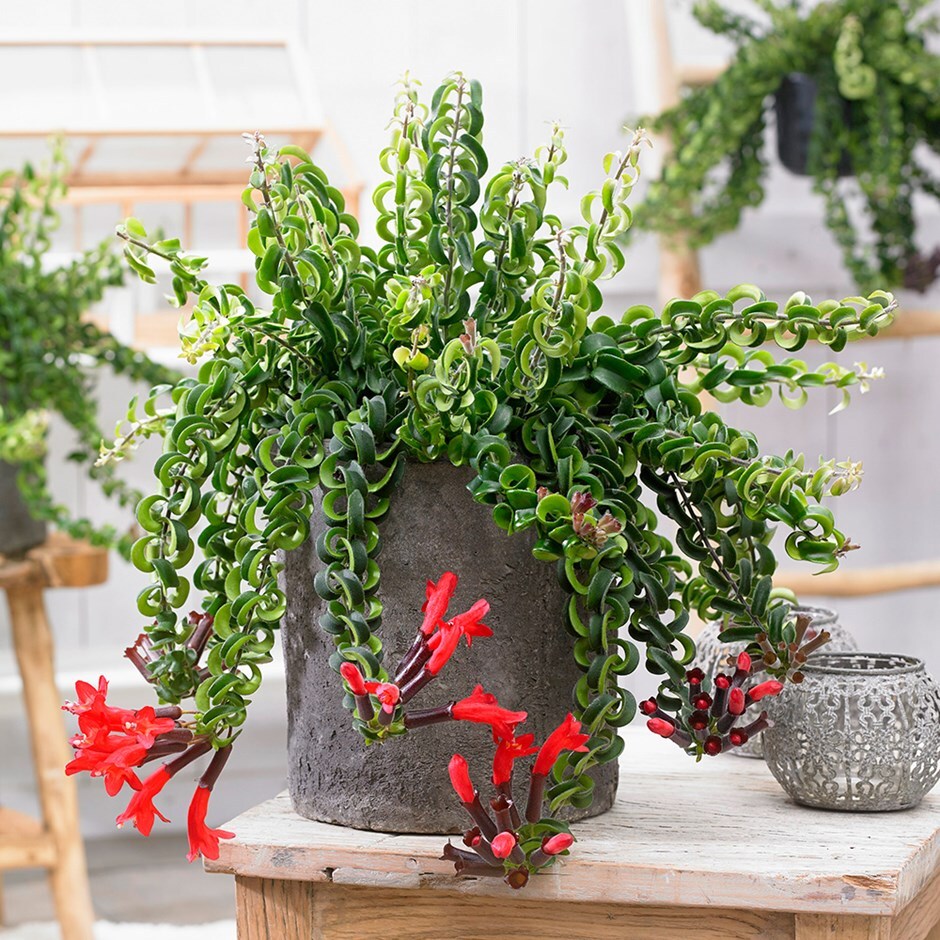
Lipstick plants belong to a tropical group of flowering plants known for their tubular blooms that emerge from dark, lipstick-like buds. Botanically, they fall under the Aeschynanthus genus, but within that group exists an impressive range of forms.
When people talk about lipstick plant varieties, they’re usually referring to differences in:
- Flower color and size
- Leaf texture and thickness
- Growth pattern (trailing, climbing, compact)
- Bloom frequency and seasonality
Some varieties are bred for dramatic flowers, while others are loved for foliage alone. That diversity is what keeps collectors hooked.
Why Lipstick Plants Are So Popular Indoors
Lipstick plants hit a sweet spot few houseplants manage to reach. They’re ornamental without being fussy, exotic without being fragile.
Here’s why they stand out:
- They thrive in bright indoor light
- Many varieties bloom multiple times a year
- Trailing types are perfect for hanging baskets
- Leaves stay glossy and attractive year-round
However, not all lipstick plant varieties behave the same. Some are forgiving beginners’ plants, while others demand attention like a diva before blooming.
Most Popular Lipstick Plant Varieties
Classic Red Lipstick Plant
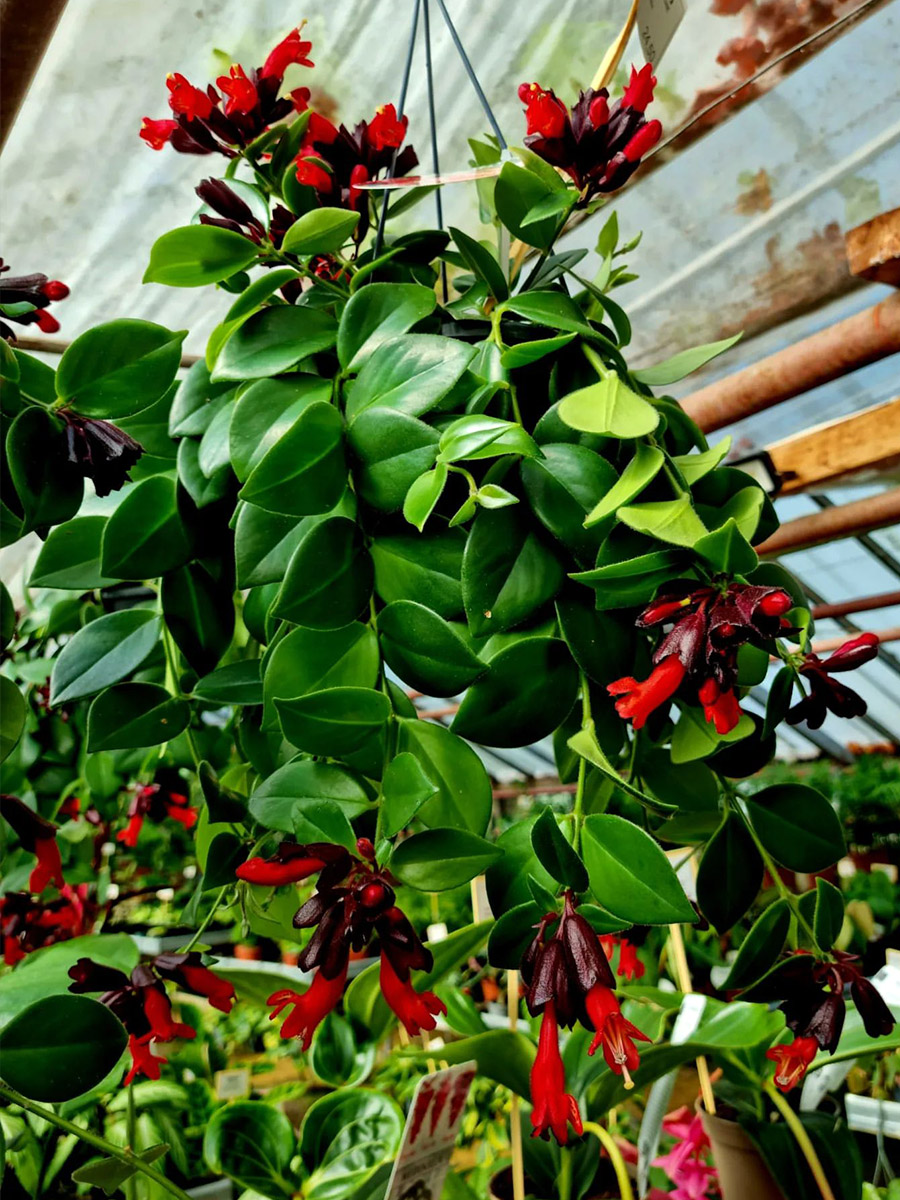
This is the variety most people picture first. Deep red tubular flowers contrast sharply with thick, waxy green leaves. It’s vigorous, reliable, and forgiving, making it ideal for beginners.
Best features:
- Consistent flowering
- Fast trailing growth
- Strong tolerance for indoor conditions
Curly Leaf Lipstick Plant
Unlike the smooth leaves of classic types, this one has twisted, curled foliage that steals the show even when it’s not blooming.
Why people love it:
- Unique leaf texture
- Compact growth
- Decorative year-round
In smaller spaces, this variety often outshines more dramatic bloomers.
Black Pagoda Lipstick Plant
Arguably the most striking among lipstick plant varieties, this type features dark green leaves with purple undersides and spotted patterns.
Highlights:
- Yellow-green flowers with darker markings
- Decorative foliage
- Slower but more controlled growth
It’s perfect for those who value leaf beauty as much as flowers.
Thai Pink Lipstick Plant
Not all lipstick plants are red. This variety produces soft pink blooms that feel delicate and romantic.
Key traits:
- Pastel-colored flowers
- Moderate growth speed
- Needs brighter light for best color
Variegated Lipstick Plant
Here, the leaves do most of the talking. Cream, light green, and dark green patterns give this plant a luminous look.
Important to know:
- Variegation needs more light
- Blooms may be fewer
- Slower growth overall
Still, it’s one of the most visually appealing lipstick plant varieties available.
Rare and Unusual Lipstick Plant Varieties
Some lipstick plants are harder to find but deeply rewarding.
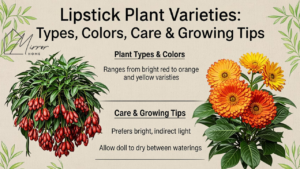
Orange and Coral Blooming Types
These varieties replace the classic red with warm sunset tones. They’re less common and often more light-sensitive.
Miniature Lipstick Plants
Bred for compact growth, these are ideal for desks, shelves, or terrariums.
Foliage-Focused Hybrids
Some hybrids barely bloom at all but offer stunning leaf patterns instead. Collectors often prize these for visual texture rather than flowers.

Choosing the Right Variety for Your Home
Before buying, ask yourself a few honest questions.
Do you want:
- Flowers or foliage as the main attraction?
- A fast-growing trailing plant or something compact?
- A low-maintenance option or a collectible challenge?
For beginners, classic red and curly leaf types are the safest bets. For experienced growers, rarer lipstick plant varieties offer more personality but demand precision.
How Flower Color and Leaf Shape Differ
Lipstick plants vary more than most people expect.
Flower colors include:
- Deep red
- Soft pink
- Yellow-green
- Orange and coral
Leaf shapes range from:
- Smooth and oval
- Thick and succulent-like
- Curled or twisted
- Variegated and patterned
In reality, leaf health often determines flower success. Shiny, firm leaves usually mean the plant is happy enough to bloom.
Care Differences Among Lipstick Plant Varieties
Although care basics are similar, subtle differences matter.
Light Needs
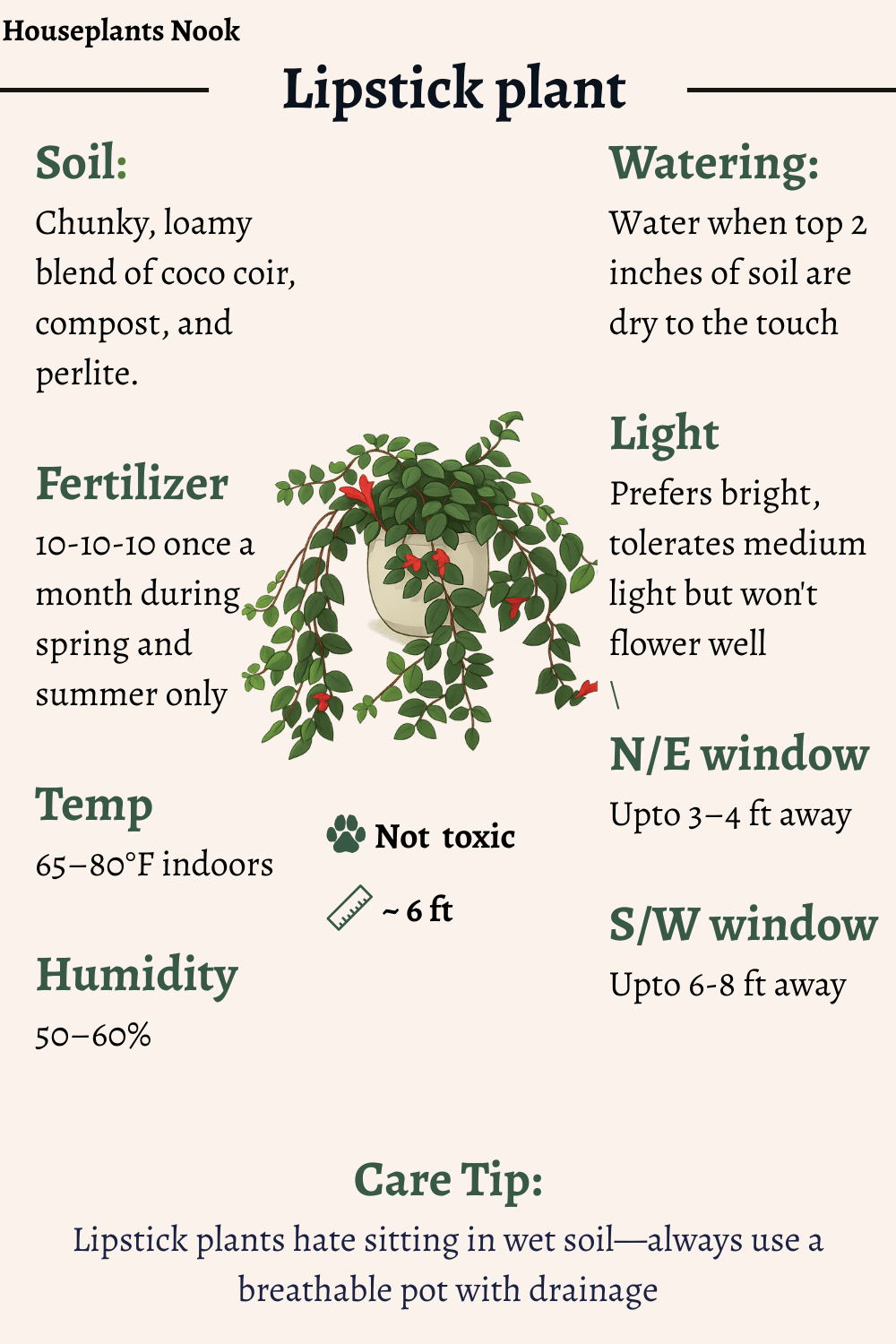
Most varieties prefer bright, indirect light. Variegated and pastel-flowering types usually need more light than dark-leaf varieties.
Watering Patterns
Overwatering is the most common killer. Thick-leaf varieties store more moisture, while thinner-leaf types dry out faster.
Humidity Preferences
All lipstick plants enjoy humidity, but foliage-heavy lipstick plant varieties show stress sooner in dry air.
Feeding and Bloom Cycles
Some varieties bloom year-round, others only seasonally. Overfeeding can cause leaf growth at the expense of flowers.
Common Problems and How Varieties React
Different varieties respond differently to stress.
- Leaf drop often signals cold drafts
- Bud drop usually means inconsistent watering
- Pale leaves can indicate low light
- No flowers often mean excess nitrogen
Understanding how your specific variety reacts saves months of frustration.
Propagation and Growth Habits by Variety
Lipstick plants propagate easily from stem cuttings, but growth speed varies.
Trailing varieties root quickly and spread fast. Compact and variegated types take longer but form denser plants over time.
Most lipstick plant varieties benefit from occasional pruning, which encourages branching and more flowers.

Frequently Asked Questions
Are lipstick plant varieties easy to grow indoors?
Yes, most are beginner-friendly as long as light and watering are balanced.
Which lipstick plant variety blooms the most?
Classic red varieties tend to flower most consistently.
Can lipstick plants survive low light?
They survive, but flowering will be limited or stop entirely.
How long do lipstick plants live?
With proper care, many live five years or more indoors.
Do all lipstick plant varieties trail?
No, some grow upright or stay compact.
Why does my plant have healthy leaves but no flowers?
It usually needs more light or less fertilizer.
Are lipstick plants safe for pets?
They are generally considered non-toxic, but mild irritation is possible if chewed.
How often should I repot different varieties?
Every two to three years is ideal, depending on growth speed.
Conclusion
Lipstick plants aren’t just one plant with different names. They’re a diverse family full of personality, color, and character. From bold red bloomers to foliage-focused showpieces, lipstick plant varieties offer something for every kind of plant lover.
Once you understand how each variety behaves—how it grows, blooms, and reacts to care—you stop guessing and start enjoying the process. And that’s when these plants truly shine, turning ordinary indoor spaces into living, blooming expressions of style and patience.