Introduction
Few spring sights stop people in their tracks like a magnolia in full bloom. Those bold, tulip-shaped flowers feel almost unreal after a long winter, which is why gardeners get surprisingly passionate when comparing options. One of the most common—and most confusing—debates is jane vs ann magnolia tree.
At first glance, Jane and Ann magnolias look almost identical. Both burst into rich pink-purple blooms, both stay relatively compact, and both are praised for surviving colder climates better than many magnolias. However, once you dig a little deeper, their differences start to matter—especially if you care about bloom timing, mature size, or long-term maintenance.
This comparison matters because choosing the wrong magnolia can mean fewer flowers, frost-damaged buds, or a tree that outgrows your space faster than expected. In reality, the “better” choice depends on where you live, how much space you have, and what kind of visual impact you want each spring.


Understanding Jane and Ann Magnolia Trees
Before diving into specifics, it helps to understand what Jane and Ann magnolias actually are. Both belong to the famous “Little Girl” magnolia series, a group of hybrids developed to solve a real problem: early magnolias bloomed too soon and often lost flowers to late spring frosts.
The jane vs ann magnolia tree discussion exists because these two cultivars are siblings in the same breeding program, yet they behave just differently enough to spark debate among gardeners and landscapers.
What Is a Jane Magnolia?
Jane magnolia is a hybrid magnolia known for its large, deep purple-pink blooms with a lighter interior. It typically flowers in mid to late spring, after the worst frost risk has passed. Many gardeners appreciate Jane for its balanced shape and reliable flowering year after year.
What Is an Ann Magnolia?
Ann magnolia is another Little Girl hybrid, slightly smaller on average and often darker in color. It blooms a bit later than Jane, which can be a major advantage in colder regions. Ann is frequently described as more shrub-like, especially in smaller gardens.
Origins and Breeding History
Both Jane and Ann magnolias were developed in the mid-20th century as part of a U.S. breeding program aimed at cold-hardy ornamental trees. The goal was simple: create magnolias that could thrive in colder climates without sacrificing dramatic flowers.
That shared origin explains why the jane vs ann magnolia tree comparison can feel so nuanced. These trees were designed with the same problems in mind, but each cultivar emphasized slightly different traits—size, bloom timing, and color depth.
Visual Differences at a Glance
At a distance, most people can’t tell Jane and Ann magnolias apart. Up close, however, subtle differences start to appear.
Flower Color
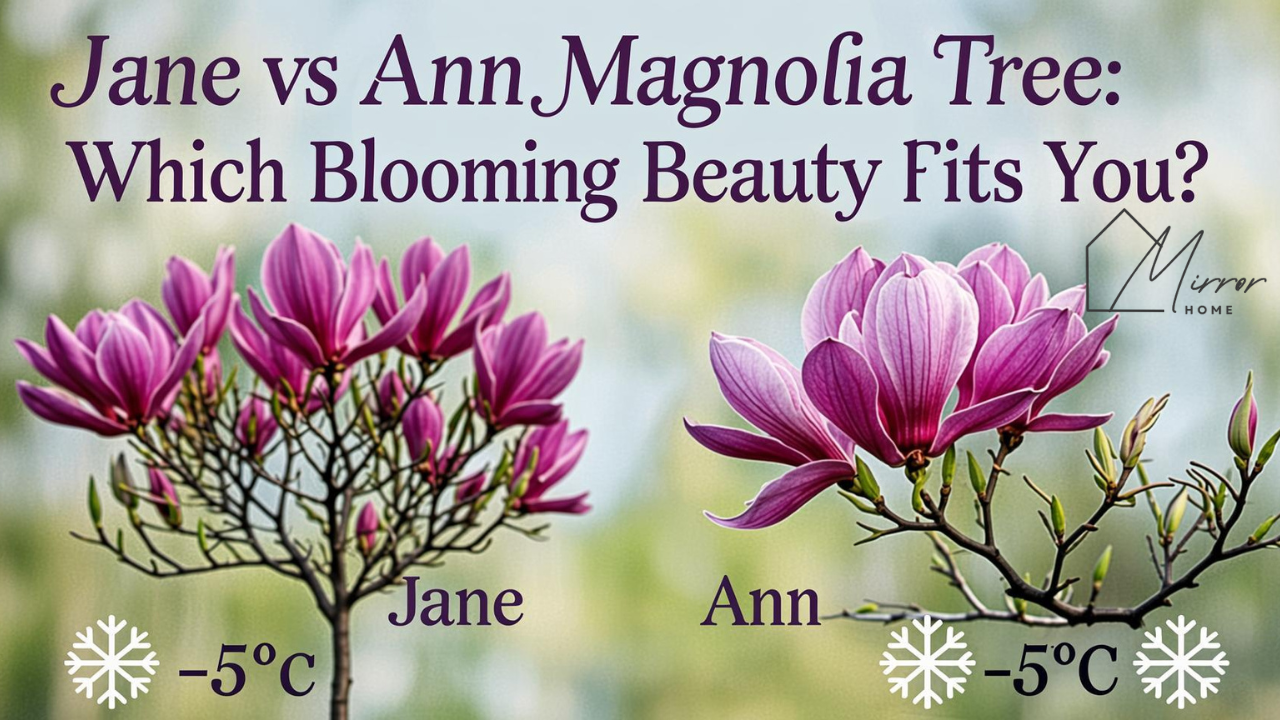
Jane magnolia flowers tend to have a brighter pink-purple exterior with a noticeably lighter, sometimes almost white, interior. Ann magnolia blooms are usually darker, leaning more toward deep reddish-purple, especially in cooler springs.
Flower Shape
Both produce classic tulip-shaped blooms, but Ann’s flowers often stay slightly more closed, giving them a tighter, more dramatic look. Jane’s blooms open wider, creating a softer, more traditional magnolia appearance.
Foliage
Once flowering is finished, both trees develop medium to dark green leaves that look nearly identical. Foliage differences rarely influence the jane vs ann magnolia tree decision, since flowers remain the main attraction.

Bloom Color, Shape, and Timing
Bloom timing is where this comparison really starts to matter.
When Jane Magnolia Blooms
Jane magnolia typically blooms in mid-spring. In many regions, that timing avoids the worst frosts while still delivering an early splash of color. Some years, Jane may even produce a lighter second bloom in summer, though it’s usually modest.
When Ann Magnolia Blooms
Ann magnolia blooms slightly later—often one to two weeks after Jane. That delay can be crucial in colder climates where late frosts are common. For gardeners in northern zones, this alone can tip the jane vs ann magnolia tree decision in Ann’s favor.
Why Bloom Timing Matters
Late frosts can turn gorgeous buds into brown mush overnight. A magnolia that blooms even a week later often looks healthier and more reliable year to year.
Tree Size, Shape, and Growth Rate
Space is another big factor when comparing these two magnolias.
Mature Size of Jane Magnolia
Jane magnolia typically grows 10–15 feet tall and about the same in width. It often develops into a small tree with a rounded canopy, making it suitable for front yards and medium-sized landscapes.
Mature Size of Ann Magnolia
Ann magnolia usually stays a bit smaller, often topping out around 8–12 feet tall. It can grow as a multi-stem shrub or be trained into a small tree. This compact habit appeals to homeowners with limited space.
Growth Speed
Neither tree grows particularly fast. Expect moderate growth, especially in the first few years. Patience pays off here—rushing growth with heavy fertilizer often leads to weak branches rather than better blooms.
Climate Tolerance and Hardiness
One reason the jane vs ann magnolia tree debate is so popular is their shared reputation for cold hardiness.
Hardiness Zones
Both Jane and Ann magnolias generally thrive in USDA hardiness zones 4–8. That range makes them suitable for a wide variety of climates, from cold northern states to milder southern regions.
Heat and Sun Tolerance
While cold tolerance gets most of the attention, heat matters too. Both trees prefer full sun to partial shade. In hotter climates, afternoon shade can help prevent leaf scorch and stress.
Wind and Exposure
Magnolias dislike strong winds, especially during bloom season. Planting near a fence, wall, or larger tree can protect those delicate flowers and extend their visual impact.
Soil, Water, and Care Requirements
Care needs are remarkably similar, which is why aesthetics and timing usually dominate the jane vs ann magnolia tree decision.
Soil Preferences
Both prefer:
- Well-draining soil
- Slightly acidic to neutral pH
- Rich organic matter
Heavy clay soils should be amended before planting to avoid root issues.
Watering Needs
Young trees need consistent watering during their first two years. Once established, Jane and Ann magnolias are moderately drought-tolerant, though regular watering improves flowering.
Pruning and Maintenance
Pruning should be minimal. Remove dead or crossing branches right after flowering. Heavy pruning can reduce next year’s blooms and stress the tree.
Landscape Uses and Design Ideas
Magnolias aren’t just trees—they’re focal points.
Best Uses for Jane Magnolia
- Front yard specimen tree
- Accent near patios or walkways
- Balanced landscapes where symmetry matters
Best Uses for Ann Magnolia
- Small gardens or courtyards
- Shrub borders or mixed hedges
- Naturalistic landscapes with layered plantings
In many designs, Ann’s slightly smaller size and darker blooms create a stronger contrast with lighter spring flowers.
Jane vs Ann Magnolia Tree: Side-by-Side Comparison
Here’s a clear breakdown to simplify the choice.
| Feature | Jane Magnolia | Ann Magnolia |
|---|---|---|
| Bloom Color | Pink-purple, lighter inside | Dark purple-red |
| Bloom Time | Mid-spring | Late spring |
| Mature Height | 10–15 feet | 8–12 feet |
| Growth Habit | Small tree | Shrub or small tree |
| Frost Resistance | Good | Slightly better |
| Best For | Medium landscapes | Small spaces |
This table highlights why jane vs ann magnolia tree isn’t about which is better overall, but which is better for your specific situation.
Common Problems and Maintenance Tips
Even hardy magnolias have their challenges.
Frost Damage
Late frosts remain the biggest threat. Ann magnolia’s later bloom often reduces this risk, but no magnolia is completely immune.
Pests and Diseases
Both trees are relatively pest-resistant. Occasional issues include scale insects or leaf spot, usually linked to stress or poor drainage.
Flower Drop
Poor flowering often comes from:
- Excessive pruning
- Late frosts
- Too much shade
Addressing these factors usually restores blooms within a season or two.
FAQ
Is Jane or Ann magnolia better for cold climates?
Ann magnolia usually performs better in colder areas because it blooms later, reducing frost damage.
Which one has darker flowers?
Ann magnolia typically has darker, richer purple blooms compared to Jane.
Can Jane and Ann magnolias grow in small yards?
Yes, but Ann magnolia is usually the better choice for very small spaces due to its compact size.
Do these magnolias bloom more than once a year?
Occasionally, Jane magnolia may produce a light second bloom in summer, though it’s not guaranteed.
How long do magnolia blooms last?
Blooms usually last 1–2 weeks, depending on weather conditions.
Are Jane and Ann magnolias messy?
Fallen petals can be noticeable but are easy to clean and short-lived.
Can I grow them in containers?
Young trees can grow in large containers temporarily, but both perform best planted in the ground long-term.
Do deer eat magnolia trees?
Magnolias are generally deer-resistant, though young trees may need protection in high-pressure areas.
Conclusion
Choosing between Jane and Ann magnolia ultimately comes down to priorities. If you want slightly larger blooms with a softer look and balanced shape, Jane magnolia often feels like the safer, more classic option. On the other hand, if you live in a colder climate or need a compact tree with deeper color and later blooms, Ann magnolia quietly steals the show.
The jane vs ann magnolia tree debate isn’t about winners and losers. It’s about understanding how subtle differences in bloom timing, size, and color affect real gardens and real lives. When matched to the right space and climate, both trees reward patience with breathtaking spring beauty that never quite gets old.