Introduction
Working from home sounds relaxing—until your back starts hurting and your focus slips away. That’s where a well-designed home office desk makes a real difference. It’s not just a piece of furniture. It’s the center of your daily productivity, comfort, and mental clarity.
A good desk can transform how you work. It supports your posture, organizes your space, and quietly shapes your routine. On the other hand, a poor setup can drain your energy without you even noticing.
In reality, many people underestimate how much their workspace affects their performance. The right home office desk doesn’t just hold your laptop—it helps you think better, work longer, and feel less tired.
Whether you’re a freelancer, student, or remote professional, choosing the right desk can be one of the smartest upgrades you make.


What Makes a Great Home Office Desk
Function Over Looks
A desk might look beautiful online, but if it doesn’t fit your workflow, it becomes frustrating. A great desk supports your daily tasks. It should have enough space for your laptop, documents, and accessories without feeling crowded.
Stability and Durability
A shaky desk is more distracting than you think. Even small movements can break your focus. Solid construction ensures your work feels stable and secure.
Comfort and Height
The desk height should match your chair and posture. If your arms are too high or too low, it creates strain over time.
Adaptability
Work needs change. A flexible desk setup allows you to adjust your layout, add accessories, or even switch between sitting and standing.
Types of Home Office Desk You Can Choose
Writing Desk
Simple, clean, and minimal. Perfect for laptops and light tasks. Ideal for small spaces.
Computer Desk
Designed for tech-heavy setups. Includes cable management and extra space for monitors and keyboards.
Standing Desk
Adjustable height lets you work while standing. Helps reduce long sitting hours.
Corner Desk
Great for maximizing space. Fits neatly into corners and offers more surface area.
Executive Desk
Large and premium. Best for professionals who need space for paperwork, multiple screens, and storage.


How to Pick the Right Size and Shape
Measure Your Space First
Before buying any home office desk, measure your room carefully. Leave space for movement and your chair.
Choose the Right Shape
- Rectangular desks suit most rooms
- L-shaped desks work best for corners
- Compact desks fit small apartments
Think About Workflow
If you use multiple screens or papers, you need more width. If your work is digital, a compact desk might be enough.
Ergonomics and Comfort Essentials
Proper Sitting Position
Your elbows should form a 90-degree angle. Your screen should be at eye level.
Chair and Desk Relationship
Your desk is only as good as your chair pairing. Together, they define your comfort.
Standing Options
Switching between sitting and standing improves blood flow and reduces fatigue.
Lighting Setup
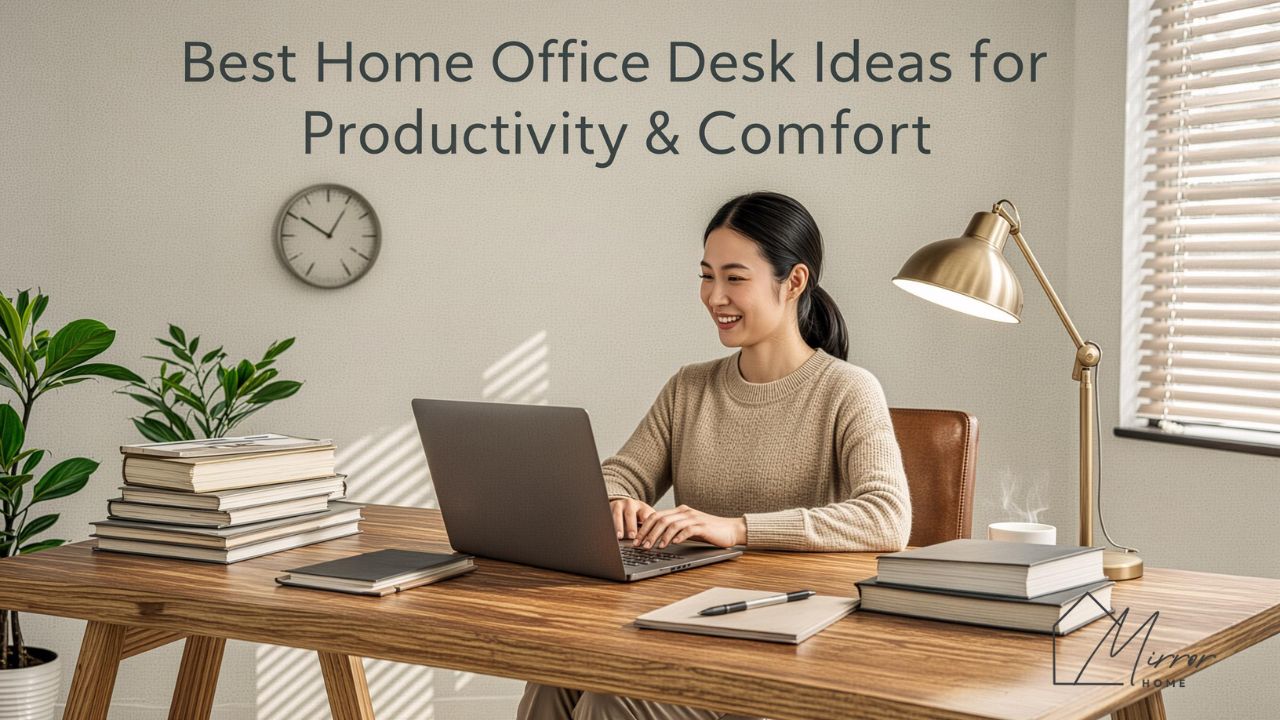
A well-lit desk reduces eye strain. Natural light is best, but a good desk lamp works too.
Materials and Build Quality Explained
Wood
Classic and warm. Strong and durable. Perfect for long-term use.
Metal
Modern and sturdy. Often used in industrial designs.
Glass
Sleek but requires regular cleaning. Not ideal for heavy setups.
Engineered Wood
Affordable and versatile. Good for budget-friendly setups.
Smart Storage and Organization Ideas
A cluttered desk leads to a cluttered mind. Organization plays a huge role in productivity.
Use Vertical Space
Shelves above your desk help free up surface area.
Drawer Systems
Keep documents and small items hidden but accessible.
Cable Management
Messy cables can ruin even the best desk setup. Use clips or cable trays.
Minimal Accessories
Keep only what you need. Too many items create distraction.
Best Desk Setup for Productivity
Keep Essentials Within Reach
Your keyboard, mouse, and notebook should be easy to access.
Add Personal Touch
A plant, photo, or small decor item can boost mood.
Maintain Clean Surface
End each day with a quick clean-up. It resets your mindset for tomorrow.
Use Zones
Divide your desk into work zones. One for digital work, one for writing, one for storage.


Common Mistakes to Avoid
Buying Without Measuring
Many people buy desks that don’t fit their space properly.
Ignoring Ergonomics
Comfort should always come first. Style comes second.
Overloading the Desk
Too many items reduce focus and efficiency.
Choosing Cheap Build
A low-quality desk may save money now but costs more later.
Personal Background / Work Trends and Financial Insights
The rise of remote work has completely changed how people view workspace design. A few years ago, most professionals worked from corporate offices. Today, millions work from home daily.
This shift has created a growing demand for better home setups. According to global workspace trends, spending on home office furniture has increased significantly since 2020. People now invest in comfort and productivity instead of temporary solutions.
Freelancers and remote employees often see their workspace as an investment. A well-designed home office desk can improve focus, reduce health issues, and increase output. Over time, this directly impacts income and career growth.
For example, many digital professionals report higher efficiency after upgrading their workspace. Better posture reduces fatigue. Cleaner setups improve mental clarity. These small changes add up to real financial benefits.
In simple terms, your desk is not just furniture. It’s part of your earning system.
FAQ Section
FAQs
What is the ideal height for a home office desk?
Most desks range between 28 to 30 inches high. The ideal height depends on your chair and posture.
Is a standing desk better than a regular desk?
It depends on your needs. Standing desks help reduce sitting time, but many people prefer a mix of both.
How much space do I need for a home office desk?
At least 3 to 4 feet width is comfortable for basic setups. Larger setups need more space.
What material is best for durability?
Solid wood and metal frames are the most durable options.
Can I use a small desk for full-time work?
Yes, if your work is mostly digital and minimal. Otherwise, you may need more space.
How do I keep my desk organized?
Use drawers, cable management tools, and keep only essential items on the surface.
Do I need an expensive desk?
Not necessarily. A good desk is about functionality and comfort, not just price.
How often should I clean my desk?
A quick daily clean and a deeper weekly organization works best.
Conclusion
Choosing the right home office desk is not about following trends. It’s about creating a space that supports your work and your well-being.
A thoughtful setup improves focus, reduces stress, and helps you stay consistent. Over time, these benefits become part of your daily routine.
If you’re serious about working better from home, start with your desk. It’s a small change that can quietly reshape how you work every single day.