
Power outages have a way of making a house feel smaller, darker, and far less predictable. One minute you are making dinner, charging your phone, or keeping the air conditioner running; the next, you are wondering how long the food in the freezer will last.
That is why home generator installation has become more than a storm-season upgrade. For many homeowners, it is a practical way to protect comfort, safety, work-from-home routines, medical devices, refrigerated food, sump pumps, heating, cooling, and the everyday rhythm of family life.
The tricky part is that installing a generator is not the same as buying another appliance. A safe setup involves electrical planning, fuel supply, local permits, transfer equipment, load calculations, placement rules, and long-term maintenance.
This guide explains what happens before, during, and after installation, so you can ask better questions, avoid expensive surprises, and choose a generator system with confidence.
What home generator installation really includes
At its simplest, home generator installation is the process of connecting a backup power source to selected circuits or the entire electrical system of a house. In real life, that includes the generator unit, transfer switch, electrical panel work, fuel connection, pad, permits, inspections, testing, and homeowner training.
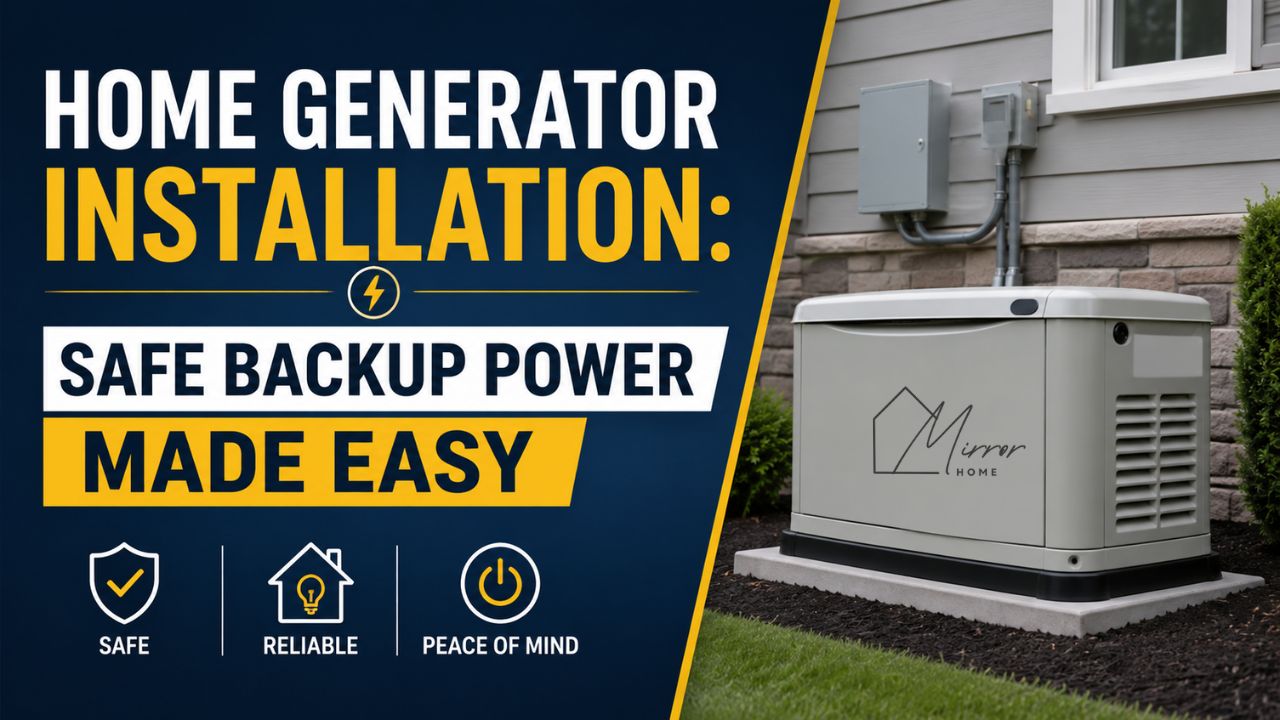
A permanent standby generator is usually installed outside the home, much like an outdoor air conditioning unit. It is connected to a fuel source, commonly natural gas or propane, and linked to the home’s electrical system through a transfer switch. When utility power fails, the system senses the outage, starts the generator, transfers the load, and restores power to the circuits it is designed to support.
Definition: standby generator
A standby generator is a permanently installed backup power system that remains ready to operate when utility power is interrupted. Unlike a portable generator that must be rolled out, fueled, and plugged in during an outage, a standby unit is fixed in place and designed to start automatically or with minimal homeowner involvement.
Standby vs. portable generator setups
A portable generator can be useful for temporary power, but it is not the same kind of project. Portable models usually run on gasoline or propane and may power individual appliances with outdoor-rated extension cords. Some can be connected through a properly installed manual transfer switch or inlet, but they still require hands-on setup.
A standby system is built for convenience and continuity. It can support larger loads, starts without dragging equipment into the rain, and avoids the dangerous practice of plugging a generator into a wall outlet. CPSC guidance warns that portable generators must never be used indoors, in garages, in basements, or close to the home because carbon monoxide can build up quickly; the agency advises outdoor operation at least 20 feet from the house with exhaust directed away from openings.
Why backup power is becoming a normal home upgrade
More homes now rely on electric garage doors, Wi-Fi routers, security systems, home offices, well pumps, sump pumps, HVAC equipment, refrigerators, freezers, and medical devices. A long outage is no longer just inconvenient; it can interrupt work, damage property, and create safety issues.
Weather is another reason homeowners are taking backup power more seriously. Severe storms, heat waves, ice, overloaded grids, and wildfire-related shutoffs can all leave neighborhoods without power. Home generator installation gives homeowners a way to prepare before the emergency arrives.
Start with your power priorities
Before comparing brands or generator sizes, decide what you actually want to keep running. This is where many homeowners overspend or undersize the system. The right generator is not simply the biggest one you can afford; it is the one matched to the loads that matter most.
Some homeowners want whole-home coverage, including central air conditioning, kitchen appliances, lights, internet, laundry, and multiple outlets. Others only need essential circuits, such as a refrigerator, freezer, furnace blower, sump pump, a few lights, Wi-Fi, and one or two outlets for charging devices.
Common essential loads
A professional installer will usually help create a load list, but it helps to think through your needs early. Essential loads often include:
- Refrigerator and freezer
- Furnace blower or boiler controls
- Sump pump or well pump
- Medical equipment
- Internet router and modem
- Kitchen outlets
- Garage door opener
- Security system
- Selected lighting circuits
Central air conditioning is often one of the biggest deciding factors. Starting an air conditioner requires a short surge of power, and that surge can influence generator size, transfer switch setup, and whether load management modules are needed.
Whole-home power vs. managed backup
Whole-home backup sounds appealing, but it is not always necessary. In many cases, a slightly smaller generator with smart load management can keep the important parts of the home running without powering everything at once. Load management allows the system to prioritize critical circuits and temporarily delay large appliances when demand is high.
This approach can lower equipment costs, reduce fuel use, and avoid installing a generator that is larger than the home truly needs.
How generator sizing works
Generator sizing is the process of matching the generator’s output to the home’s electrical demand. It is usually measured in kilowatts, often shortened to kW. A small standby generator may cover essential circuits, while larger units can support most or all of a home, depending on the electrical load.
The important word is “load.” Every appliance, motor, pump, and circuit requires power. Some equipment needs more power to start than to keep running. Air conditioners, well pumps, refrigerators, and sump pumps can create startup surges that must be considered during sizing.
Why guessing is risky
Guessing based on square footage alone can lead to problems. A 2,000-square-foot home with gas heat and one small air conditioner may have very different backup power needs from a similar-sized home with electric heat, a large heat pump, a well pump, and multiple refrigerators.
Undersizing can cause overloads, nuisance shutdowns, flickering lights, and frustrated homeowners. Oversizing can increase installation cost, fuel use, maintenance expense, and noise without adding much practical benefit. A good installer will look at the electrical panel, major appliances, starting loads, fuel supply, and your expectations before recommending a size.
Questions to answer before sizing
Before scheduling estimates, write down practical answers to questions such as:
- Do you want to power the whole home or only essentials?
- Do you have a well pump or sump pump?
- Is your heat electric, gas, oil, or propane?
- Do you want central air conditioning during an outage?
- Are there medical devices that must remain powered?
- Do you work from home and need internet continuity?
- Do you have electric vehicle charging, a pool pump, or workshop equipment?
These details help turn the project from a vague purchase into a tailored power plan.
Choosing the right fuel source
Fuel choice affects cost, runtime, maintenance, placement, and convenience. Most permanent residential standby generators use natural gas or liquid propane. Diesel exists in some residential applications, but it is more common in commercial or rural settings.
Natural gas is convenient because it is supplied through a utility line. There is no tank to refill, and the generator can continue running as long as the gas service remains available and the equipment is properly maintained. However, the home’s gas meter and piping must be able to support the generator plus other gas appliances.
Propane is popular where natural gas is unavailable. It stores well, burns cleanly, and can support long outages when the tank is sized properly. The tradeoff is that propane requires tank placement, delivery planning, and attention to fuel level before storm season.
Fuel supply must match the generator
A common mistake is assuming that an existing gas line is automatically large enough. A standby generator can require significant fuel volume, especially at higher loads. If the pipe is too small or the meter cannot keep up, the generator may run poorly or fail under demand.
This is why fuel planning is part of home generator installation, not a side detail. The installer, plumber, or gas contractor may need to evaluate pipe diameter, meter capacity, regulator requirements, propane tank size, and local code rules before finalizing the project.
Placement, clearances, and noise
Generator placement affects safety, performance, service access, and neighbor relations. The unit needs a stable base, adequate airflow, proper exhaust direction, clearance from windows and doors, and enough room for technicians to perform maintenance. Local rules may also regulate setbacks from property lines, openings, meters, combustible materials, and other equipment.
Manufacturers provide specific clearance requirements, and local inspectors may apply additional standards. Some municipalities require plan submittals showing the generator location, property boundaries, fuel source, manufacturer specifications, electrical loads, and conductor details before approving the work.
Noise is another practical consideration. Standby generators are quieter than many portable units, but they still make engine and exhaust noise during weekly exercise cycles and outages. Placing the unit thoughtfully can reduce annoyance for both your household and your neighbors.
The pad matters
A standby generator must sit level and stable. Installers may use a preformed composite pad or pour a concrete pad depending on the unit, soil conditions, local requirements, and manufacturer instructions. The generator should not sit where water pools, snow piles up, or landscaping blocks airflow.
Permits, inspections, and transfer switches
Permits are not just paperwork. They help confirm that the installation is reviewed for electrical safety, fuel safety, placement, and local building requirements. Depending on your area, the project may require electrical, mechanical, plumbing, gas, zoning, or building permits.
The transfer switch is the heart of a safe generator connection. It separates utility power from generator power so electricity does not backfeed into power lines or energize circuits in an unsafe way. CPSC’s stationary generator report describes automatic transfer switches as devices that detect utility interruption and switch the home’s supply from utility power to generator power.
Why backfeeding is dangerous
Backfeeding happens when generator power is pushed into the home’s wiring in a way that can also energize utility lines. This can endanger utility workers, neighbors, and anyone working on the electrical system. It can also damage equipment and create fire hazards.
A properly installed transfer switch or approved interlock arrangement is designed to prevent this problem. This is one of the main reasons generator connections should be handled by qualified electrical professionals, not improvised during an outage.
Codes and standards
Electrical codes exist because generators involve more than convenience. They connect an independent power source to a building wiring system. NFPA explains that NFPA 110 addresses emergency and standby power systems, including performance requirements for transfer switches and associated equipment. For typical homes, your installer should also follow the locally adopted electrical code, manufacturer instructions, utility rules, and inspection requirements.
The home generator installation process step by step
A smooth project usually follows a predictable path. The exact order can vary by contractor and location, but most installations move through consultation, sizing, permitting, site preparation, electrical work, fuel work, equipment placement, inspection, startup, and homeowner orientation.
During the consultation, the installer reviews your electrical panel, asks about outage priorities, checks available fuel, evaluates generator placement, and discusses budget. This is the time to mention future plans too, such as adding a heat pump, finishing a basement, buying an electric vehicle, or installing a second refrigerator.
Step 1: Site assessment
The site assessment confirms where the generator can safely and legally go. The installer considers distance from openings, service access, exhaust direction, gas meter location, electrical panel location, property lines, drainage, and noise.
Step 2: Load calculation and equipment selection
Next comes the load calculation. This determines how much power the generator must provide and whether the system will support the whole home or selected circuits. The contractor may recommend a specific generator size, transfer switch type, load management equipment, fuel upgrades, or panel changes.
Step 3: Permits and utility coordination
Once equipment is chosen, the contractor usually applies for permits. In some areas, the gas utility or electric utility must also be involved, especially if the meter needs upgrading, electrical service must be disconnected, or work occurs near utility-owned equipment.
A straightforward home generator installation may move quickly, while projects involving long gas runs, zoning questions, trenching, HOA rules, or panel upgrades can take longer.
Step 4: Pad, fuel, and electrical work
The installation crew prepares the base, places the generator, runs fuel piping, installs the transfer switch, connects wiring, and integrates the system with the electrical panel. Depending on the home, this can involve conduit, trenching, gas pressure testing, load management modules, and coordination between electricians and fuel contractors.
Step 5: Inspection, startup, and homeowner training
After installation, the system is inspected according to local requirements. Once approved, the installer performs startup testing. This may include checking voltage, frequency, transfer operation, fuel pressure, exercise schedule, battery condition, and connected loads.
Good homeowner training matters. You should know how the system operates, what normal weekly exercise sounds like, where the shutoff is, how to read basic status lights or app alerts, and when to call for service.
What affects the cost of installation
The price of home generator installation depends on far more than the generator itself. Equipment size matters, but so do electrical complexity, fuel distance, trenching, permits, panel condition, transfer switch type, local labor rates, and site constraints.
A home with an accessible gas meter, nearby electrical panel, simple placement, and no panel upgrades will usually cost less to complete than a property requiring long trenching, a gas meter upgrade, concrete work, landscaping repair, or complicated load management.
Common cost drivers
The biggest cost factors usually include generator size and brand, transfer equipment, distance to the electrical panel, distance to the fuel source, gas meter or propane tank upgrades, pad requirements, trenching, permit fees, panel condition, load management modules, and maintenance plans.
It is smart to compare detailed written estimates rather than one-line prices. Ask each contractor to explain what is included, what could become an extra charge, and what assumptions the quote is based on.
Safety habits after the system is installed
A standby generator is designed to be ready when needed, but “ready” depends on maintenance. Like any engine-driven equipment, it has oil, filters, a battery, spark plugs, belts or hoses on some models, and electronic controls that need periodic attention.
Most systems run a short exercise cycle weekly or biweekly. This keeps the engine lubricated, helps identify problems, and gives the battery and controls a routine check. Still, an exercise cycle is not a substitute for professional maintenance.
Carbon monoxide awareness
Carbon monoxide is colorless and odorless, which makes it especially dangerous. Even permanently installed generators produce exhaust, and placement matters. CPSC has warned that stationary generators can run for days without consumer action, which may increase potential exposure if exhaust enters a home or nearby structure.
Every home with combustion appliances or a generator should have working carbon monoxide alarms on every level and outside sleeping areas. Test alarms regularly and never ignore one.
Maintenance checklist
A basic maintenance plan may include replacing oil, air, and fuel filters; inspecting the battery and charger; testing transfer operation; clearing leaves, snow, and debris; checking fuel connections; reviewing fault codes; confirming the exercise schedule; and updating service records.
Maintenance is also a good time to review whether your power needs have changed. A new HVAC system, finished addition, electric range, hot tub, or EV charger can affect the original load plan.
Choosing the right installer
The quality of the installer matters as much as the generator brand. A reliable contractor should be licensed where required, insured, familiar with local permitting, comfortable with load calculations, and able to coordinate electrical and fuel work.
Ask direct questions. Who pulls the permits? Who handles the gas connection? Is startup included? Will the installer register the warranty? What maintenance is recommended? What happens if the generator shows a fault during the first outage? Clear answers before signing help prevent frustration later.
Red flags to watch for
Be cautious if a contractor suggests skipping permits, plugging the generator into a dryer outlet, placing the unit wherever it is easiest, ignoring manufacturer clearances, or sizing the generator without asking about your loads. Those shortcuts can create serious risks.
Good contractors explain tradeoffs. They do not pressure you into the largest unit without reason, and they do not promise that every appliance can run at once unless the system is actually designed for that demand.
FAQ
How long does home generator installation take?
The physical work often takes one to three days for a straightforward standby system, but the full timeline can be longer because of permits, utility coordination, inspections, fuel upgrades, and weather.
Do I need a permit to install a home generator?
In most areas, a permanently installed generator requires permits and inspections. Requirements vary by city, county, utility, fuel type, and electrical scope. Your installer or local building department can confirm what is needed.
Can a generator power my whole house?
Yes, but only if it is sized and installed for that purpose. Whole-home backup may require a larger generator, automatic transfer equipment, load management, and adequate fuel supply.
What size generator do I need?
The right size depends on the loads you want to support, not just the square footage of the house. HVAC equipment, pumps, refrigerators, electric appliances, and startup surges all matter.
Is natural gas or propane better?
Natural gas is convenient where utility service is available because there is no tank to refill. Propane is a strong option for rural homes, but the tank must be sized for expected runtime.
Where should a standby generator be placed?
A standby generator should be outdoors on a stable pad with proper clearance, airflow, service access, and exhaust direction. It must also comply with manufacturer instructions and local setback rules.
Can I install a transfer switch myself?
Transfer switch work connects generator power to the home’s electrical system, so it is usually handled by a licensed electrician and inspected by the local authority. Mistakes can cause backfeeding, shock hazards, equipment damage, and fire risks.
How often does a standby generator need maintenance?
Most standby generators need scheduled maintenance at least once a year, though heavy use, long outages, dusty conditions, and manufacturer requirements may call for more frequent service.
Conclusion
Home generator installation is really about peace of mind. It is the difference between hoping the power comes back soon and knowing your home has a plan when the grid goes down.
The best results come from thoughtful choices: size the system around your real needs, choose the right fuel source, respect placement and safety rules, use proper transfer equipment, pull the required permits, and keep up with maintenance after the first startup.
A well-installed generator should not feel complicated in the moment you need it most. It should feel calm, reliable, and almost boring: the lights blink, the engine starts, the transfer switch does its job, and your home keeps moving.