When your closet feels like it’s about to burst and you’re stacking sweaters on chairs, there’s usually a simple solution hiding in plain sight: a clothing rack. What looks like a humble metal bar on wheels can completely transform how you store, display, and even style your wardrobe.
A clothing rack isn’t just for boutiques or backstage fashion shows anymore. It’s become a staple in modern homes—especially in small apartments, minimalist bedrooms, laundry rooms, and creative studios. Whether you’re organizing seasonal outfits, setting up a pop-up shop, or curating your dream capsule wardrobe, the right rack can make your life feel instantly lighter and more organized.

In this in-depth guide, we’ll explore every angle—from materials and design styles to weight capacity and real-world usage. By the end, you’ll know exactly which type suits your space, budget, and lifestyle.
Types of Clothing Rack
Not all racks are created equal. Some are built for heavy winter coats. Others are designed purely for aesthetic appeal.
Freestanding Clothing Rack
A freestanding clothing rack is the most common type. It stands independently, typically with a horizontal bar supported by two vertical posts. Some include lower shelves for shoes or storage bins.
Best for:
- Bedrooms
- Guest rooms
- Seasonal wardrobe rotation
These are ideal if you want flexibility without drilling into walls.
Rolling Garment Rack
Equipped with wheels, this version is a lifesaver if you move clothing frequently. Think laundry days, fashion events, or retail restocking.
Advantages:
- Mobility
- Easy reconfiguration
- Ideal for shared spaces
However, always check the locking mechanism on the wheels to prevent unwanted movement.
Wall-Mounted Rack
This option saves floor space. Mounted directly to the wall, it’s perfect for narrow hallways or compact apartments.
Pros:
- Space-saving
- Modern, minimalist look
- Stable and sturdy
Cons:
- Permanent installation
- Limited portability
Double-Bar Rack
If you’re dealing with a large wardrobe, a double-bar clothing rack provides two levels of hanging space. Shirts on top, pants below—it doubles your capacity instantly.
Heavy-Duty Industrial Rack
Built with thick steel tubing and reinforced joints, these racks handle serious weight—think winter coats, leather jackets, or retail inventory.
How to Choose the Right Clothing Rack
Buying a clothing rack isn’t complicated—but choosing the wrong one can be frustrating. Here’s how to avoid that.
1. Consider Weight Capacity
This is where many buyers go wrong. A lightweight rack might hold 20–30 pounds comfortably. Heavy-duty versions can support 150–300 pounds.
Ask yourself:
- Are you storing bulky coats?
- Is this temporary or permanent storage?
2. Measure Your Space
Before clicking “Add to Cart,” measure:
- Width
- Height
- Depth
Remember to allow space for hangers to swing freely. A cramped rack defeats its purpose.

3. Purpose Matters
Different goals require different builds:
| Purpose | Recommended Type | Key Feature |
|---|---|---|
| Small bedroom | Freestanding | Slim profile |
| Retail shop | Heavy-duty | High weight capacity |
| Laundry room | Rolling | Mobility |
| Capsule wardrobe | Minimalist wood | Aesthetic appeal |
4. Material and Finish
We’ll explore this deeper below, but materials affect durability, style, and price significantly.
Materials and Build Quality
A clothing rack can look sleek but fail under pressure if the materials are subpar.
Metal Racks
Typically made from steel or iron, these are strong and affordable. Powder-coated finishes resist rust.
Best for: Durability and industrial style.
Wooden Racks
Often crafted from bamboo or pine, wooden racks add warmth and elegance.
Best for: Scandinavian or minimalist interiors.
Combination Designs
Metal frame + wooden shelves = durability meets style.
When shopping, inspect:
- Weld joints
- Screw fittings
- Bar thickness
Thin tubing bends easily under weight.
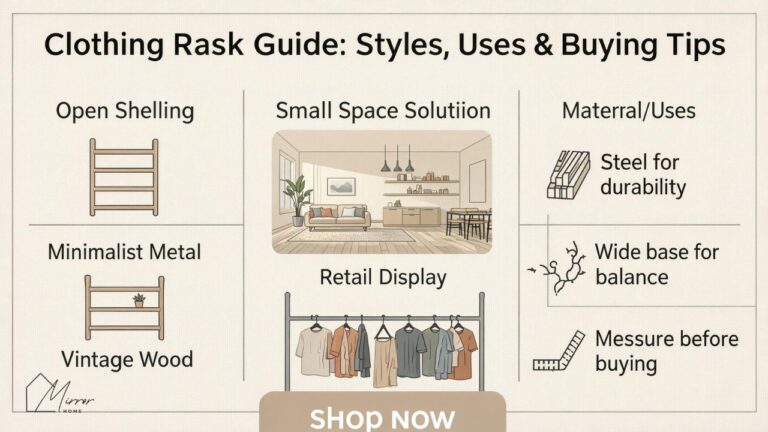
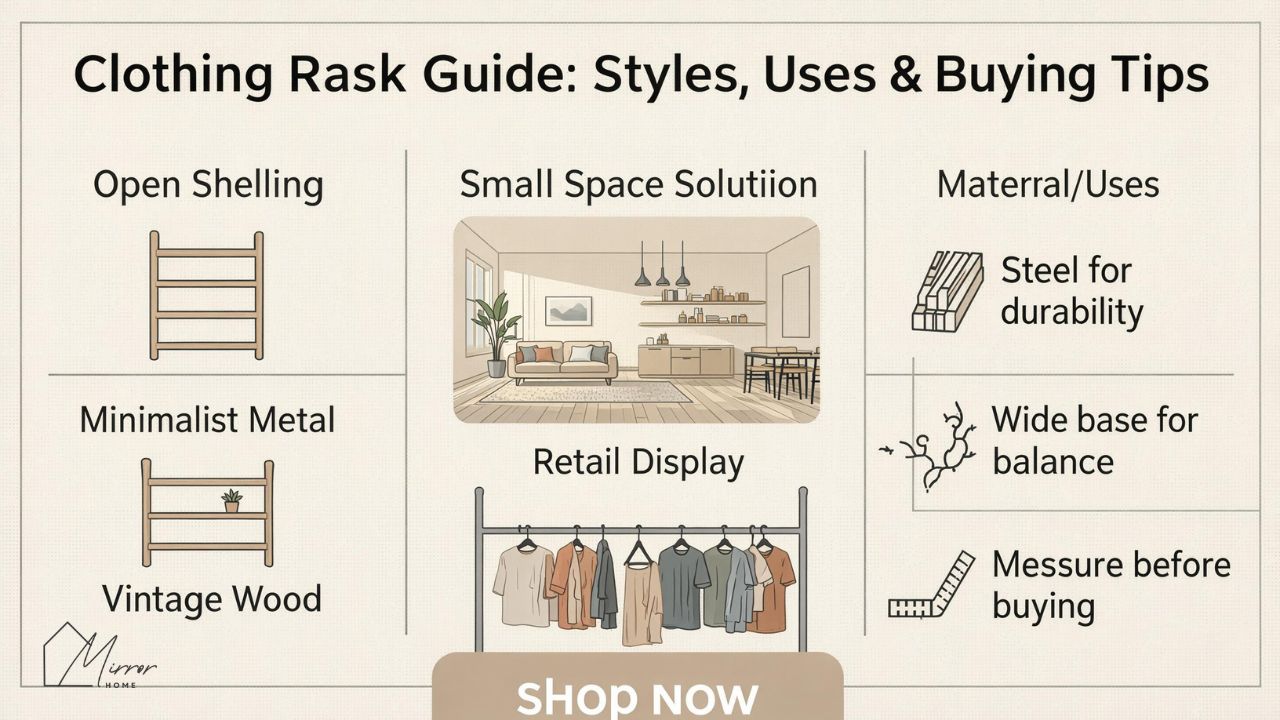
Clothing Rack for Small Spaces
If you live in a studio apartment, you know every square foot matters.
A well-chosen clothing rack can:
- Replace bulky wardrobes
- Serve as room dividers
- Add visual openness
Vertical racks with shelves maximize storage without eating floor space. In reality, many interior designers recommend open racks because they prevent clutter buildup—you see everything, so you’re less likely to hoard.
Minimalism isn’t just aesthetic; it’s practical.
Clothing Rack for Retail and Commercial Use
In boutiques, presentation is everything. A clothing rack becomes part of the brand story.
Key Commercial Features
- Reinforced steel frames
- Adjustable height
- High load capacity
- Smooth rolling casters
Retailers often prefer double-bar or Z-shaped racks for maximizing floor inventory.
Interestingly, studies in visual merchandising show that well-spaced racks increase browsing time. Shoppers feel less overwhelmed when items aren’t crammed together.
Styling and Decorating with a Clothing Rack
Here’s where practicality meets personality.
A clothing rack can be styled intentionally:
- Arrange clothes by color gradient
- Mix textures (linen, denim, wool)
- Add plants or baskets below
It becomes décor, not just storage.
Interior designers often recommend leaving 20–30% empty space on your rack. Negative space makes the display feel curated rather than chaotic.

Organization Tips for Maximum Efficiency
Owning a rack is one thing. Using it well is another.
Rotate Seasonally
Store off-season clothes elsewhere to reduce weight and clutter.
Use Matching Hangers
Uniform hangers instantly elevate appearance.
Add Shelf Bins
Lower shelves can hold:
- Shoes
- Folded sweaters
- Storage boxes
Follow the 80/20 Rule
We wear 20% of our clothes 80% of the time. Keep your favorites front and center.
Maintenance and Longevity
A quality clothing rack can last years if maintained properly.
- Tighten screws every few months
- Avoid exceeding weight limits
- Clean metal surfaces to prevent rust
- Avoid placing heavy items unevenly
If wheels squeak, apply silicone lubricant—not oil, which attracts dust.
Personal Background: How Minimalist Living Changed My Wardrobe
A few years ago, my closet was a disaster. Shirts piled on chairs, jackets stuffed into corners. I bought a simple clothing rack as a temporary fix during renovation.
Something unexpected happened.
Seeing my entire wardrobe displayed openly forced me to confront what I actually wore. I downsized by nearly 40%. Instead of feeling deprived, I felt relieved.
That one purchase changed my approach to clothing. It wasn’t about storage—it was about clarity. My spending habits improved, impulse purchases decreased, and dressing each morning became easier.
Financially, adopting a minimalist wardrobe saved me thousands annually. Fewer but higher-quality items replaced constant fast-fashion purchases. Over time, the rack paid for itself many times over.
FAQs
What is the average weight capacity of a clothing rack?
Most standard racks hold between 50 and 150 pounds. Heavy-duty commercial models can support up to 300 pounds.
Is a clothing rack better than a closet?
It depends on your lifestyle. Racks offer visibility and flexibility, while closets conceal clutter.
Can a clothing rack damage floors?
Rolling racks can scratch hardwood if wheels lack protective coating. Use rubber casters or floor pads.
How long does a clothing rack last?
With proper maintenance, quality racks last 5–10 years or more.
Are wooden racks strong enough for winter coats?
Solid hardwood racks can handle moderate weight, but always check load specifications.
How do I prevent my rack from tipping over?
Distribute weight evenly and avoid overloading one side.
Is it okay to store shoes on the bottom shelf?
Yes, as long as weight distribution remains balanced.
What size clothing rack do I need?
Measure your space and consider hanger width. A 36–48 inch width suits most bedrooms.
Conclusion
A clothing rack may seem simple, but its impact is anything but. From decluttering cramped apartments to elevating boutique displays, it offers flexibility, visibility, and style in one streamlined solution.
Whether you choose a heavy-duty industrial model or a minimalist wooden frame, the key is alignment—matching the rack to your needs, space, and lifestyle. When chosen thoughtfully, it doesn’t just hold clothes. It changes how you interact with them.
And sometimes, that small shift makes all the difference.