When you are choosing hardware, the smallest detail can unexpectedly shape the whole room. Brushed nickel vs satin nickel sounds like a minor choice at first, but once you start comparing faucets, cabinet pulls, shower trims, and light fixtures, the difference suddenly feels very real.
That is because finish affects more than color. It changes how a room reflects light, how often you notice fingerprints, how modern or classic the space feels, and even how easy it is to coordinate everything from the sink to the towel bar. Delta describes satin nickel as a smooth, soft, low-gloss silver finish with subtle warm undertones, while brushed finishes are often favored because they help mask fingerprints and water spots.
If you have been staring at product pages and wondering whether these finishes are basically the same thing or genuinely different, you are not overthinking it. In real homes, they can look similar from far away and noticeably different up close. This guide breaks it all down in plain language so you can choose with confidence.
What brushed nickel and satin nickel actually mean
Before comparing looks, it helps to understand what these terms usually describe.
What is brushed nickel?
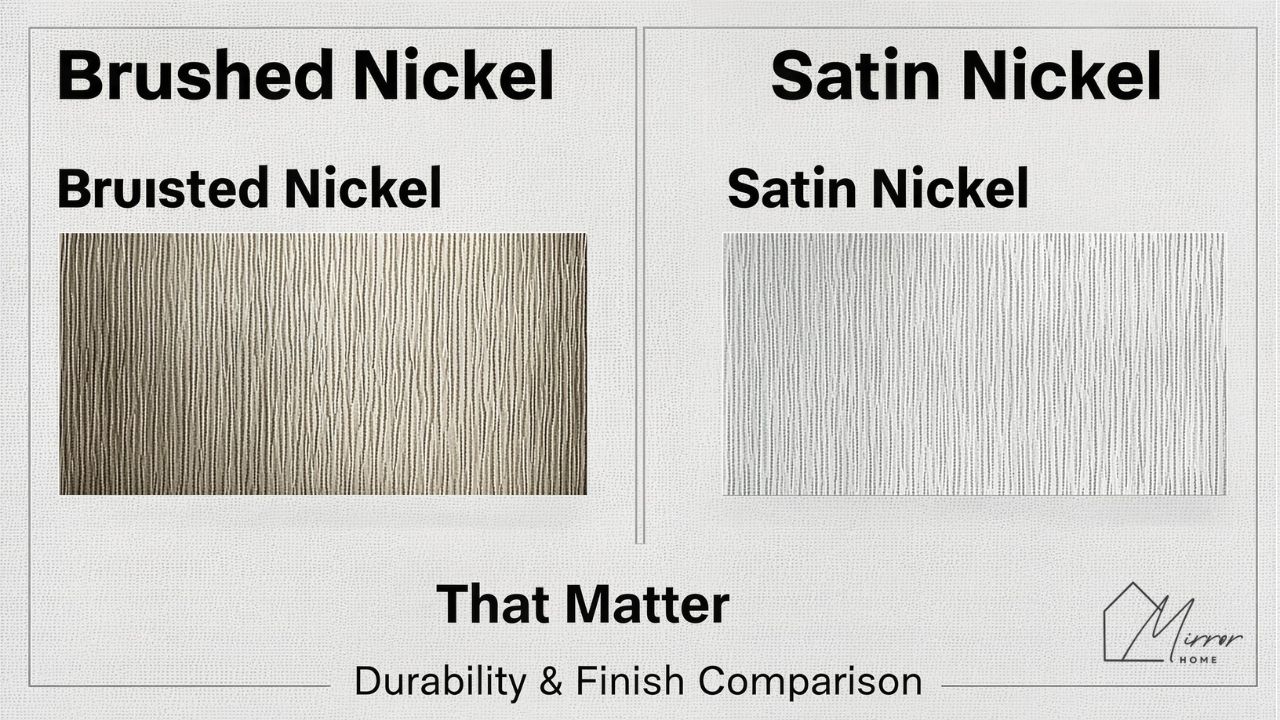
Brushed nickel is a nickel-toned finish with visible brushing or directional texture. It usually has a muted shine rather than a glossy, mirror-like surface. Many manufacturers position brushed finishes as practical because the textured look tends to disguise smudges, fingerprints, and water spots better than shinier alternatives. Delta specifically notes that brushed surfaces are forgiving when ease of cleaning matters.
In everyday terms, brushed nickel often feels a bit more textured, a little more casual, and slightly more industrial or transitional depending on the product.
What is satin nickel?
Satin nickel is usually softer-looking and more even in appearance. Delta describes satin nickel as a low-gloss finish with subtle warm undertones and a smooth, soft surface. Some hardware brands also describe satin nickel as a warm silver with visible brushing and mild gloss, which helps explain why consumers often confuse it with brushed nickel.
In real life, satin nickel often looks smoother and more refined. It still avoids the harsh glare of polished chrome, but it can read slightly cleaner and more uniform than brushed nickel.
Brushed nickel vs satin nickel at a glance
Here is the simple version many shoppers wish they had from the beginning.
| Feature | Brushed Nickel | Satin Nickel |
|---|---|---|
| Overall look | Soft metallic with visible texture | Smooth, low-gloss, more even finish |
| Sheen | Muted | Low-gloss, often a touch silkier |
| Texture | Brushed lines are easier to notice | Smoother, more blended surface |
| Warmth | Warm silver tone | Warm silver tone |
| Fingerprints | Usually hides them well | Good, but depends on brand and coating |
| Water spots | Often less obvious | Usually decent, but finish varies |
| Best for | Busy kitchens, family bathrooms, transitional spaces | Elegant bathrooms, refined kitchens, classic-modern spaces |
| Visual vibe | Practical, lived-in, subtle | Clean, polished-soft, understated |
The tricky part is that manufacturers do not always define these finishes in exactly the same way. In some product lines, satin nickel and brushed nickel look nearly identical. In others, satin nickel is smoother and slightly brighter, while brushed nickel has clearer texture. That is why samples, close-up photos, and brand consistency matter so much.
Appearance and texture differences
This is where the brushed nickel vs satin nickel debate really matters.
Brushed nickel has more visible movement
If you look closely at brushed nickel, you will often notice fine lines or a directional grain. That texture breaks up reflections. The result is a finish that feels calm, practical, and forgiving. In a kitchen, that can be a huge advantage because faucets, drawer pulls, and appliance handles take constant abuse.
Brushed nickel tends to look especially natural in homes that lean transitional, farmhouse, industrial, or relaxed contemporary. It works well when you want metal finishes to support the room rather than demand attention.
Satin nickel looks smoother and more tailored
Satin nickel usually feels more uniform. Instead of seeing obvious brushing, you often get a silky surface with a soft glow. It still has warmth, but it can read a bit more polished and intentional.
That makes satin nickel appealing in bathrooms and powder rooms where you want a cleaner, slightly more elevated look. It often pairs beautifully with white vanities, warm woods, taupe walls, marble counters, and soft lighting.
The difference is subtle, not dramatic
This is the part many people miss. These two finishes are rarely worlds apart. They are neighbors, not opposites.
If you compare them from across the room, they may look nearly the same. The contrast becomes clearer when:
- natural light hits them from the side
- you place them beside chrome or stainless steel
- you touch them and notice the texture
- you compare two items from the same manufacturer
That subtlety is exactly why choosing the wrong one can feel annoying later. A finish that seemed “close enough” online can look slightly off once everything is installed.
Which finish is easier to maintain?
For many homeowners, this is the real decider.
Brushed nickel usually wins for everyday mess
Because brushed nickel has more texture and less obvious reflection, it tends to hide fingerprints, smudges, and water spots better than smoother finishes. Delta explicitly recommends brushed surfaces for people who want a finish that masks fingerprints more easily.
That makes it a smart choice for:
- family kitchens
- kids’ bathrooms
- rental properties
- high-traffic guest baths
- homes with hard water
If you hate seeing every tiny mark, brushed nickel is often the safer bet.
Satin nickel still performs well
Satin nickel is not high-maintenance in the way polished chrome or glossy black can be. It is still fairly forgiving. But because the surface is often smoother and more even, water marks may be a bit easier to notice depending on lighting and the coating used by the manufacturer.
This does not mean satin nickel is difficult. It just means if you are extremely picky about visible spotting, brushed nickel often gives you a little more grace.
Cleaning tips for both
Use a soft cloth, mild soap, and water. Avoid abrasive pads, harsh powders, bleach-heavy cleaners, or anything likely to scratch the surface. Even durable finishes can lose their beauty if cleaned too aggressively.
A good rule is simple: gentle cleaning more often is better than aggressive cleaning once things look bad.
Durability and long-term wear
Finish appearance is one thing. Daily life is another.
Brand quality matters more than the label alone
One of the biggest mistakes people make is assuming the words “brushed nickel” or “satin nickel” guarantee a certain level of durability. In reality, the manufacturer’s coating process often matters more than the name.
For example, Delta markets certain specialty finishes with spot-resistant technology, and Kohler promotes some brushed nickel products as highly resistant to corrosion. Those claims show that durability depends heavily on the product line, not just the color family.
So when comparing two fixtures, do not only ask:
- Is it brushed nickel?
- Is it satin nickel?
Also ask:
- Is the finish PVD-coated or specially protected?
- Does the manufacturer mention corrosion resistance?
- Is there a finish warranty?
- Are buyers reporting fading, peeling, or spotting?
In real homes, both can last well
If you buy from a reputable brand and clean the fixtures properly, both finishes can hold up beautifully for years. The bigger risk is not usually the finish category itself. It is buying low-quality hardware that looks good for six months and disappointing after that.
That is why a slightly more expensive faucet or pull can be the smarter long-term buy.
Best rooms and design styles for each finish
The right finish is often the one that matches your room’s mood.
Brushed nickel vs satin nickel in kitchens
In kitchens, brushed nickel is often the crowd favorite. It handles traffic well, works with stainless appliances, and tends to hide the reality of cooking, splashes, and frequent touching. That is a huge plus when your faucet is one of the hardest-working objects in the room.
Choose brushed nickel in a kitchen if you want:
- a practical finish
- less visible mess
- a relaxed designer look
- an easy match with many cabinet colors
Satin nickel can still look beautiful in kitchens, especially upscale or softer modern spaces. It works nicely when the room feels calm, light, and curated rather than busy and rugged.
Brushed nickel vs satin nickel in bathrooms
Bathrooms are where satin nickel often shines. Its smoother, softer glow feels elegant and flattering under warm lighting. It can make a bathroom feel thoughtful without looking flashy.
Choose satin nickel in a bathroom if you want:
- a polished but not shiny look
- warm, upscale softness
- a finish that complements marble, white tile, or warm neutral palettes
Brushed nickel is also a strong bathroom choice, especially in shared bathrooms where easy maintenance is more important than a silky finish.
Style pairing guide
| Design style | Better fit |
|---|---|
| Transitional | Either one |
| Modern farmhouse | Brushed nickel |
| Soft contemporary | Satin nickel |
| Minimalist warm modern | Satin nickel |
| Busy family home | Brushed nickel |
| Classic bathroom refresh | Satin nickel |
| Rental or flip property | Brushed nickel |
| Industrial-leaning interiors | Brushed nickel |
How lighting changes the look
Lighting can completely change your opinion of a finish.
Warm lighting brings out softness
Under warm bulbs, both finishes look warmer and richer. Satin nickel can appear especially elegant here because the glow feels smooth and balanced.
Cool lighting can flatten the difference
Under cooler white lighting, the gap between the two may shrink visually. Both can read as soft silver-gray. This is one reason online product photos can be misleading. Studio lighting, editing, and screen settings can make satin nickel and brushed nickel look almost identical.
Natural light reveals texture best
Side light from a window is often where brushed nickel reveals itself most clearly. The texture catches light in a way satin nickel usually does not. If you are torn between the two, a physical sample placed near a window is often more helpful than twenty product images.
Mixing nickel finishes with other metals
A lot of homeowners worry that one wrong finish will ruin the room. That fear is usually bigger than the reality.
You can mix metals successfully
Nickel finishes mix well with:
- matte black
- stainless steel
- chrome in small amounts
- brass when the room has a warm palette
Build.com notes that silver-toned finishes such as brushed and satin nickel are commonly used in contemporary spaces and can be integrated with other finishes when done thoughtfully.
Follow one simple rule
Let one finish lead and one finish support.
For example:
- faucet in brushed nickel
- cabinet hardware in brushed nickel
- light fixture in matte black
Or:
- vanity faucet in satin nickel
- mirror frame in satin nickel
- sconces in warm brass
That feels intentional. The room has contrast, but it still looks designed rather than accidental.
Avoid mixing brushed nickel and satin nickel randomly
This is where things can get awkward. Because they are similar, they can look like a mismatch instead of a deliberate contrast if they are placed too close together. A brushed nickel faucet next to satin nickel handles may simply look like you tried to match and missed.
If you want consistency, stick to one finish family within the same sightline.
What to check before you buy
This part saves money, stress, and returns.
1. Compare finishes within the same brand
Manufacturers label finishes differently. A brushed nickel from one brand may look smoother than a satin nickel from another. Brand-to-brand comparison is where mistakes happen most often.
2. Look at close-up photos
Wide room photos are nice, but they often hide texture. Zoomed product shots tell the real story.
3. Read finish descriptions carefully
Words like “soft,” “brushed,” “satin sheen,” “low-gloss,” and “warm undertones” matter. They signal whether the finish is textured, smooth, matte, or slightly luminous.
4. Think about who uses the room
A guest powder room and a chaotic family kitchen do not need the same finish priorities.
5. Order a sample when possible
This is still the smartest move. Even an inexpensive sample can prevent an expensive regret.
Common mistakes people make
A finish choice usually goes wrong in familiar ways.
Choosing from one online photo
A single styled product image rarely tells you enough.
Ignoring undertones
Nickel finishes are usually warm silver, but the exact warmth can shift by brand. That difference matters beside countertops, tile, and paint.
Mixing too many “almost matching” metals
This is one of the most common design mistakes. Similar-but-not-same finishes can feel accidental.
Prioritizing trend over function
A finish that looks perfect on social media may drive you crazy if it constantly shows spots in real life.
Forgetting the whole room
Your faucet does not live alone. It has to work with lighting, cabinet pulls, shower trim, mirror frames, and even appliance handles.
Quick decision guide
If you want the fastest answer possible, use this:
Choose brushed nickel if you want:
- less visible fingerprints
- a textured, forgiving surface
- a hardworking kitchen finish
- a transitional or practical designer look
Choose satin nickel if you want:
- a smoother, softer finish
- a slightly more tailored appearance
- a refined bathroom look
- understated elegance without high shine
For many people, the smartest conclusion in the brushed nickel vs satin nickel debate is this: brushed nickel is the safer functional choice, while satin nickel is often the prettier aesthetic choice.
FAQ
Is brushed nickel the same as satin nickel?
No, but they are very close. Brushed nickel usually has more visible texture, while satin nickel tends to look smoother and more even. The exact difference depends on the manufacturer.
Which is better, brushed nickel or satin nickel?
Neither is universally better. Brushed nickel is often better for hiding fingerprints and water spots, while satin nickel is often chosen for its softer, more refined appearance.
Does satin nickel look more modern?
It can, especially in warm modern or soft contemporary spaces. However, brushed nickel also works beautifully in modern rooms when the design leans practical and understated.
Is brushed nickel easier to clean?
In everyday use, yes. Its textured surface tends to disguise fingerprints and spotting better than smoother finishes.
Can I mix brushed nickel and satin nickel in the same room?
You can, but it is risky. Because they are so similar, the result can look like a mismatch rather than a deliberate design choice.
Which finish is better for kitchen faucets?
Brushed nickel is often the safer pick for kitchens because it handles visual wear well and coordinates easily with stainless appliances.
Which finish is better for bathrooms?
Satin nickel often feels especially attractive in bathrooms because of its soft glow, though brushed nickel is still excellent in shared or high-traffic spaces.
Does satin nickel show water spots?
It can show them a bit more than brushed nickel depending on the product and lighting, though it is still far more forgiving than very shiny finishes.
Why do product photos make them look the same?
Studio lighting, editing, and screen settings flatten subtle differences. In person, texture and sheen are easier to notice.
What is the safest choice if I am unsure?
If low maintenance matters most, go with brushed nickel. If appearance matters most and the room is less demanding, satin nickel is a beautiful choice.
Conclusion
The real answer to brushed nickel vs satin nickel is not about picking a winner for every home. It is about choosing the finish that fits your habits, lighting, and style.
Brushed nickel feels practical, forgiving, and easy to live with. Satin nickel feels smooth, quiet, and a touch more refined. Both can look beautiful. Both can age well. The right one simply depends on whether you care more about camouflage or polish, daily function or soft elegance.
When in doubt, compare samples in your actual room, under your actual lighting, beside your actual materials. That tiny bit of extra effort is usually what turns a good design decision into the one you still love years later.