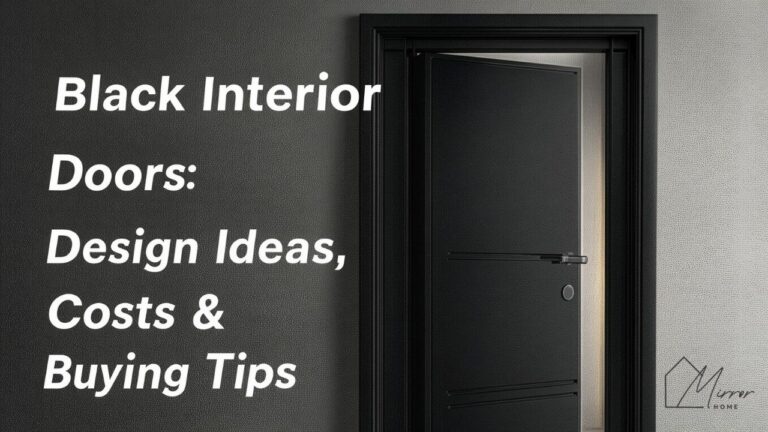
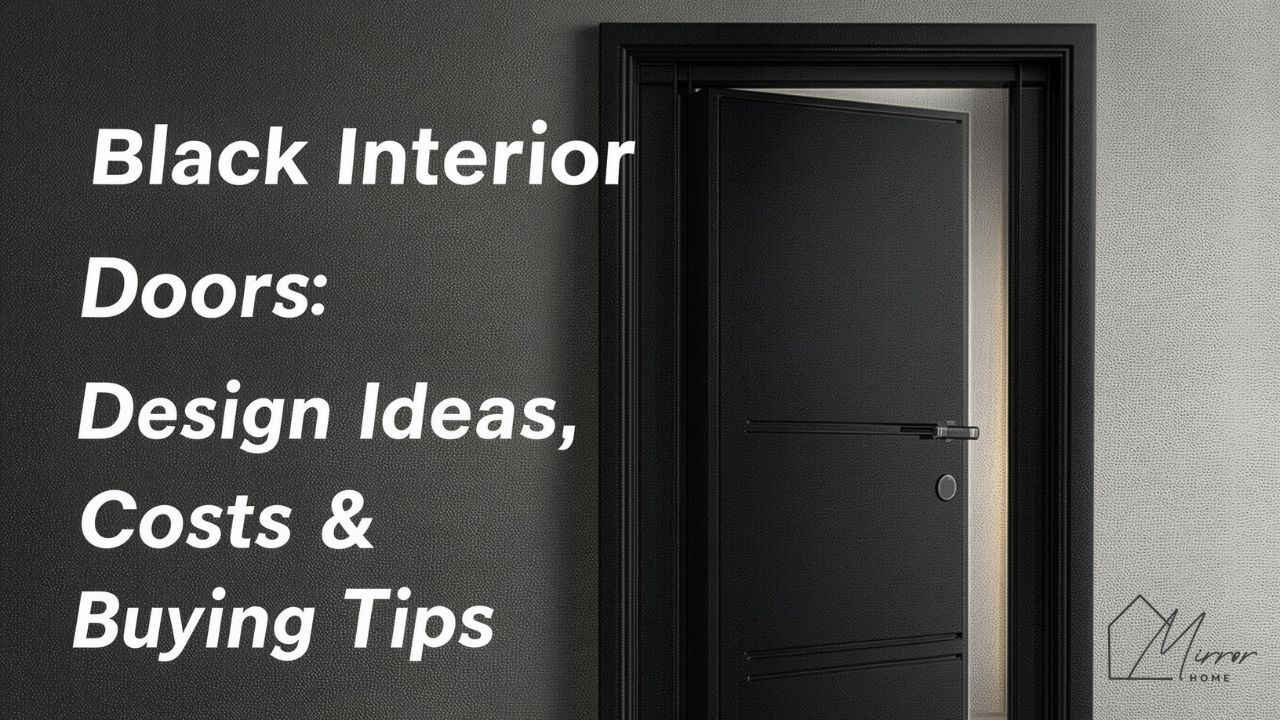
Some design choices quietly sit in the background. Others change the entire feeling of a home the second you notice them. Black interior doors do exactly that. They feel bold, polished, and a little unexpected, which is part of their charm.
That is also why so many homeowners are drawn to them right now. A door seems like a small detail until one coat of deep black paint suddenly makes the walls look crisper, the trim feel sharper, and the whole room look more custom than it did before.
Still, this is one of those ideas that can go very right or very wrong. In one home, it looks elegant and timeless. In another, it feels heavy, cold, or oddly out of place. The difference usually comes down to lighting, undertones, hardware, flooring, and how the rest of the room supports the choice.
This guide covers all of it in a practical, human way: the pros, the drawbacks, the best styles, what they cost, where they work best, and how to make the look feel elevated rather than trendy.
Why black interior doors are so popular
At the most basic level, dark doors create contrast. And contrast is what gives a room shape. In a home filled with soft whites, warm neutrals, or pale wood tones, a black door works like a clean frame around an opening. It helps the architecture stand out instead of fading into the background.
There is also an emotional layer to the appeal. Black tends to feel grounded, confident, and intentional. A standard builder-grade door may do its job, but it rarely adds character. Paint that same door black, swap in better hardware, and suddenly it feels like part of a design plan instead of a default setting.
That transformation is why this look has become so popular in remodels, custom builds, and even simple weekend refreshes. It offers a high-visual-impact change without requiring a full renovation. A hallway becomes more structured. A home office feels more polished. A bedroom gains a boutique-hotel mood with surprisingly little effort.
What makes dark doors different from white or wood doors
White doors usually blend in. Natural wood doors add warmth and texture. Gray doors stay quiet and flexible. Black is more assertive than all three.
It naturally highlights:
- panel details
- trim lines
- hardware
- symmetry in hallways
- transitions between one room and the next
That is exactly why the look can be so beautiful. It adds definition. However, it also means sloppy prep work, bad paint sheen, or mismatched finishes will be more obvious.
Are dark doors a passing trend?
Yes and no. They are definitely trending in modern interiors, but the idea itself is not new. Historic homes, European apartments, and classic townhouses have used dark-painted millwork for years. What feels new is how often everyday homeowners now use the look in standard suburban and builder-grade spaces.
In reality, the staying power comes from balance. When black is paired with warm wood, soft wall color, natural light, and thoughtful hardware, it does not feel trendy at all. It feels tailored.
The pros and cons before you commit
Before you buy new doors or break out the paint roller, it helps to look at the full picture. <strong>black interior doors</strong> can be stunning, but they are not automatically right for every room or every home.
The biggest benefits
They instantly make a home feel more custom
One of the most appealing things about this look is how quickly it elevates an ordinary space. Even a plain flush or hollow-core door can feel sharper when painted a rich black and paired with good hardware.
They work across multiple design styles
This is not a look limited to one aesthetic. It works well in:
- modern homes
- modern farmhouse interiors
- transitional spaces
- traditional rooms with detailed trim
- industrial-inspired homes
- minimalist interiors that need contrast
They create depth in bright spaces
If your home has white walls, pale floors, or lots of daylight, a black door acts like a visual anchor. It keeps the room from feeling washed out or flat.
They photograph beautifully
This matters more than people admit. Rooms with contrast usually look better in listing photos, renovation reveals, and everyday snapshots. The eye can immediately read the shape of the room.
The main drawbacks
They can feel heavy in low-light rooms
A dark basement hallway or small room with limited natural light may not be the best place to go all in with black. The effect can feel moody in a good way, or gloomy in a bad way. Lighting decides which direction it goes.
They show dust, lint, and hand marks differently
White doors tend to show grime around handles and edges. Black doors do not hide everything either. Matte finishes in particular can reveal fingerprints, smudges, and dry dust.
Touch-ups can be annoying
Dark paint can be less forgiving when it comes to sheen. Even if you use the same paint, a touch-up spot may flash differently in sunlight if it was brushed instead of rolled.
The surrounding finishes matter more
A black door with creamy yellow walls, orange-toned flooring, and bright chrome hardware can feel disconnected fast. Dark doors need a little more coordination from the rest of the room.
Quick pros and cons table
| Factor | Advantages | Drawbacks |
|---|---|---|
| Style impact | Bold, upscale, designer feel | Can overwhelm dark rooms |
| Maintenance | Hides yellowing better than white | Dust, oils, and scuffs may show |
| Versatility | Works with many home styles | Needs supporting finishes |
| Value perception | Makes rooms feel more custom | Poor prep stands out quickly |
| DIY payoff | Big visual upgrade for modest cost | Touch-ups can be tricky |
[Infographic suggestion: Pros vs. cons of dark-painted interior doors, including style, upkeep, cost, and lighting]
Best styles, finishes, and hardware choices
Color matters, but style matters just as much. The exact profile of the door, the sheen of the paint, and the finish of the hardware all shape the final result.
Best door styles for dark-painted doors
Shaker doors
Shaker doors are the safest all-around option. Their clean lines fit modern, transitional, and updated traditional homes with very little effort. A one-panel or two-panel shaker door in black feels crisp without looking overly formal.
Classic paneled doors
Raised or recessed panel doors can look rich and timeless in older homes. If your house has crown molding, substantial baseboards, or more traditional trim, this style often feels right at home.
Flat slab doors
For modern or minimalist interiors, slab doors are a strong match. They create a sleek, uninterrupted shape that looks especially sharp in matte or satin black.
French doors
French doors with black frames are a favorite for offices, dining rooms, and flexible living spaces. They bring contrast while still letting light pass through, which makes them more forgiving than a fully solid dark door.
Choosing the right paint finish
A black door can look soft, dramatic, luxurious, or harsh depending on sheen alone.
| Finish | Best for | Overall look | Possible downside |
|---|---|---|---|
| Matte | Low-traffic rooms | Soft and modern | Shows marks more easily |
| Eggshell | Bedrooms, offices | Subtle low sheen | Less durable than satin |
| Satin | Most homes | Balanced and practical | Highlights flaws a bit |
| Semi-gloss | High-traffic family spaces | Classic and durable | Can look too shiny |
For most people, satin is the sweet spot. It is durable, wipeable, and polished without looking overly reflective.
Hardware that works best
Hardware is where the look either levels up or loses momentum.
The best pairings tend to be:
- matte black levers for a seamless look
- aged brass for warmth and contrast
- brushed nickel for a softer transitional finish
- oil-rubbed bronze for traditional spaces
A real-life example: if you have warm white walls, medium oak flooring, and black doors, aged brass handles usually feel warmer and more expensive than cool chrome. On the other hand, in a sleek contemporary home with gray stone floors, matte black or brushed nickel often makes more sense.
Should the trim be black too?
Sometimes, but not always.
Black door with white trim is the most reliable combination. It gives you contrast without making the room too visually dense. Matching black trim can work in moody spaces, powder rooms, or dramatic studies, but it needs enough light and wall contrast to breathe.
How to use black interior doors in different rooms
One of the smartest things about this design move is that you do not have to commit to every door in the house. Selective use often looks more intentional.
Hallways and corridors
This is where the effect can be surprisingly strong. A row of matching black doors along a light hallway creates rhythm and structure. It makes a plain corridor look designed rather than leftover.
To keep the space from feeling narrow, pair the doors with:
- light walls
- strong overhead lighting
- mirrors
- pale runners
- natural wood flooring
Living rooms and open-concept spaces
In larger spaces, one dark door can act like a punctuation mark. A pantry door, powder room door, or office door in black helps break up long walls and adds depth to an open-plan layout.
This works especially well when there is another black element nearby, like window frames, pendant lights, or shelving hardware. Repetition is what makes it feel cohesive.
Bedrooms
Bedrooms usually benefit from a softer version of the look. A super glossy pitch-black door can feel too sharp in a room meant for rest. A softer black or charcoal-black in satin tends to feel calmer.
These colors pair beautifully with black bedroom doors:
- warm white
- taupe
- muted sage
- dusty blue
- soft clay beige
Bathrooms and laundry rooms
These are great places to experiment because the square footage is smaller and the payoff is immediate. A black door in a laundry room can add personality even if the rest of the space is simple.
Just make sure the paint finish can handle frequent wiping, humidity, and everyday wear.
Home offices
This may be one of the best rooms for the look. A black office door feels focused, polished, and a little luxurious. Black-framed French doors are especially effective because they separate space without blocking daylight.
What colors, trim, and flooring work best
A door never works alone. It is part of a palette. And in most homes, the success of this look has less to do with the door itself and more to do with what surrounds it.
Wall colors that pair beautifully
These shades usually work best:
- warm white
- soft greige
- mushroom taupe
- pale gray
- muted sage
- dusty blue
- clay beige
Crisp white gives the sharpest contrast. Greige softens the effect. Muted greens and blues make black feel richer and a little moodier without becoming heavy.
Flooring makes a huge difference
Floor tone changes how black reads in a room.
| Floor tone | Effect with dark doors | Best overall vibe |
|---|---|---|
| Light oak | Fresh, airy contrast | Modern organic, Scandinavian |
| Medium brown wood | Warm and balanced | Transitional, farmhouse |
| Dark espresso | Rich but heavier | Traditional, formal |
| Cool gray flooring | Cleaner, sharper look | Contemporary |
| Natural stone or tile | Refined and polished | Spa-like, upscale |
If your floor has strong orange undertones, sample paint carefully. Some blacks lean blue, while others lean brown or charcoal. That undertone match matters more than many people expect.
White trim or matching trim?
White trim is the easiest win. It frames the door, keeps the outline crisp, and stops the room from looking too dark.
Matching black trim can be beautiful too, but it is less forgiving. It works best in intentionally moody interiors where the walls, art, and lighting are all part of a bigger design story.
What about ceiling height and natural light?
Dark elements visually carry more weight. In a room with low ceilings and limited daylight, multiple black surfaces can make the space feel shorter or tighter.
That said, the answer is balance, not avoidance. Keep the walls lighter, use layered lighting, and repeat black in smaller details instead of covering every surface.
Cost, installation, and DIY considerations
This is the practical part, and honestly, it is where many homeowners decide whether the idea stays on the mood board or actually happens.
How much do black painted interior doors cost?
The biggest cost difference comes down to whether you are painting existing doors or buying new ones.
| Project type | Typical cost level | Best for |
|---|---|---|
| DIY paint on existing doors | Low | Budget-friendly refresh |
| Professional painting | Moderate | Smooth finish across multiple doors |
| New hollow-core prehung door | Moderate | Standard bedroom or hallway updates |
| New solid-core door | Higher | Better sound control and premium feel |
| Black-framed glass or French doors | Higher to premium | Offices and statement rooms |
Painting existing doors is usually the best-value route if the doors are in good condition. Replacement makes more sense when the current doors are damaged, warped, flimsy, or visually dated.
DIY vs. professional painting
You can absolutely do this yourself, but prep work is everything.
A smart process looks like this:
- Remove or carefully tape hardware.
- Clean the surface thoroughly.
- Sand lightly for adhesion.
- Repair dents or chips.
- Prime where needed.
- Apply thin, even coats.
- Let the paint cure properly before heavy use.
A lot of disappointing results come from rushing. People skip sanding, use the wrong roller, or close the door too soon, then end up with sticking edges, uneven sheen, or visible brush marks.
When replacement is the better option
Replacement is often the smarter move if:
- the door has old peeling layers
- it feels hollow and flimsy
- the profile looks dated
- sound control matters
- you are already upgrading trim and hardware
Solid-core doors painted black feel especially luxurious because the physical weight matches the visual weight. When one closes with a soft, solid sound, the whole room feels more expensive.
Common mistakes to avoid
This is where good ideas lose momentum. The details matter.
Picking the wrong undertone
Not every black is truly neutral. Some lean blue, some brown, some gray, and some even have a green cast. Always test samples near your wall paint, flooring, and trim before committing.
Ignoring sheen
A black semi-gloss finish may look perfect in one home and overly shiny in another. The sheen has to fit the room, the light, and the style of the house.
Going too dark without balance
There is a line between dramatic and dreary. If you already have dark floors, heavy furniture, and limited daylight, too many black surfaces can close the room in.
Forgetting hardware and hinges
This is an easy one to overlook. The paint may be beautiful, but bright silver hinges with a matte black lever and aged brass light fixture can make the project feel unfinished.
Skipping prep
Dark paint is unforgiving. Dents, roller stipple, patchy primer, and rushed repairs show up fast. Prep is not the glamorous part, but it is the part people notice later.
Personal background, design history, and market insights
For a home design topic like this, “personal background” is less about one person’s biography and more about the story of the style itself: where it came from, why it became popular, and why homeowners keep investing in it.
The design history behind dark-painted doors
For years, many homes defaulted to white six-panel doors because they were easy, affordable, and safe for builders. Over time, homeowners started wanting more personality without committing to expensive structural renovations.
That shift opened the door, literally, to painted millwork. Designers began using darker doors to create contrast, frame openings, and make simple rooms feel more curated. What started as a designer trick gradually became a homeowner favorite because it solved a common problem: how do you make a basic room feel intentional on a reasonable budget?
Why the look connects with homeowners emotionally
There is a real emotional pull here. People want homes that feel thoughtful. They want a space that looks finished, not accidental. Dark doors can create that feeling because they signal a decision was made.
A plain hallway with white doors can feel forgettable. The same hallway with black doors, matching hardware, and soft lighting feels considered. That difference is not just visual. It feels good to live with.
Financial insight and value perception
There is no universal resale number attached to this exact upgrade, but the financial logic is easy to understand. This is one of those home improvements that offers a strong visual payoff compared to its cost.
Why it appeals from a value perspective:
- cheaper than replacing flooring
- faster than remodeling a kitchen
- more visible than changing one light fixture
- easier to reverse than built-in changes
- effective in photos and walkthroughs
In simple terms, black-painted doors often improve perceived value. And perceived value matters. Buyers, guests, and even homeowners themselves respond to details that make a home feel finished.
FAQ
Are black interior doors still in style?
Yes. They are still very much in style because they add contrast, character, and a custom feel. More importantly, they work across many design styles, which gives them better staying power than short-lived trends.
Do dark doors make a room look smaller?
They can in a room that already lacks light. However, in a bright space with lighter walls and good balance, they often make the room feel more structured rather than smaller.
What is the best finish for interior doors painted black?
For most homes, satin is the safest and most practical finish. It offers durability and easy cleaning without the extra shine of semi-gloss.
Should every door in the house match?
Not necessarily. Many people use black only in hallways, offices, or feature spaces. The key is making it feel intentional and repeated, not random.
Do black doors go with white trim?
Absolutely. This is one of the most timeless pairings because the white trim frames the dark door and keeps the contrast crisp.
Are black interior doors hard to keep clean?
They are manageable, but they do show dust, lint, and fingerprints differently than white doors. Choosing the right sheen and wiping them regularly helps a lot.
What wall colors work best with black doors?
Warm white, greige, taupe, muted sage, and dusty blue are all strong choices. The best one depends on your floor tone, natural light, and how bold you want the contrast to feel.
Is it better to paint existing doors or buy new ones?
If your current doors are in good shape, painting them is usually the best-value option. If they are damaged, outdated, or flimsy, replacement may be worth the investment.
Conclusion
The beauty of black interior doors is that they can completely change the tone of a room without demanding a full renovation. They add contrast, structure, and a tailored feel that many homes are missing.
When the undertones are right, the hardware is coordinated, and the surrounding finishes support the look, the result feels less like a trend and more like a design upgrade that should have been there all along. Whether you try one office door or commit to a full hallway refresh, this is one of the most effective ways to make a home feel more intentional, more polished, and more memorable.