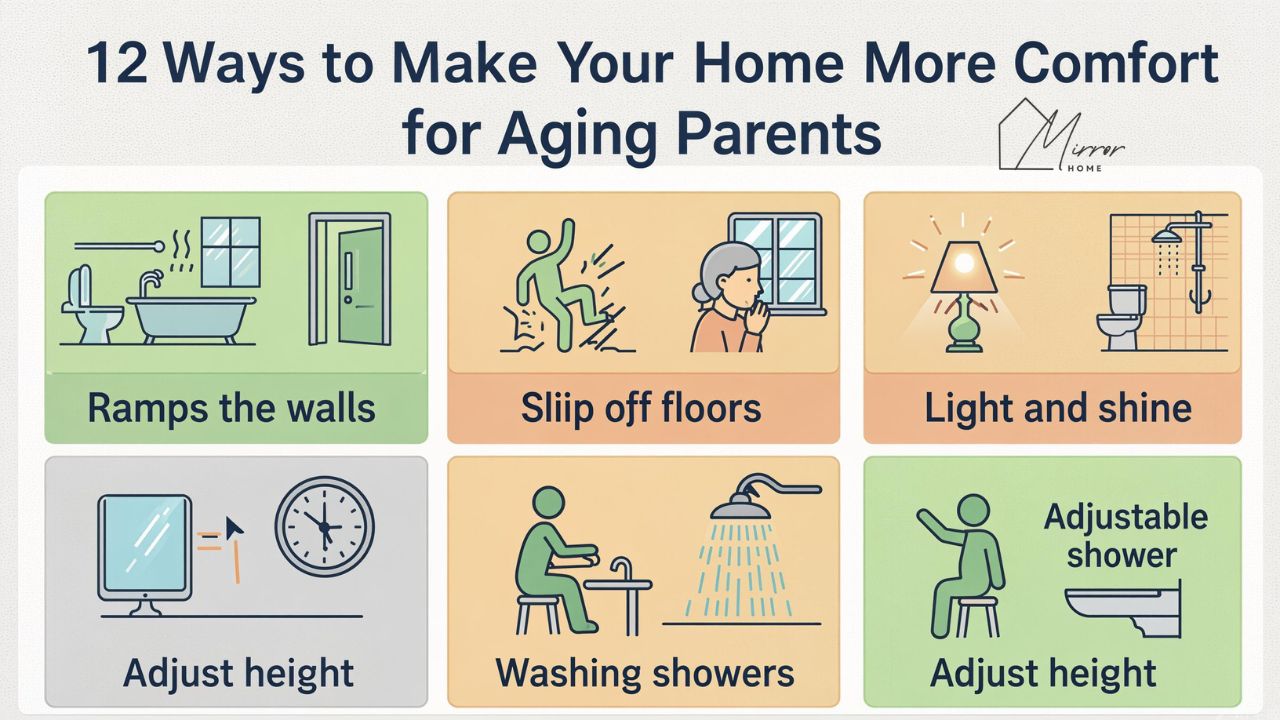
When your elderly parents start spending more time in your home or even express interest in moving in, your space needs to adjust. You need to account for risks and routines older adults typically face. Here are 11 ways to make your home safer and more comfortable for your aging parents.

- Improve Lighting Throughout the Home
Aging eyes need more light to feel confident in daily movement. Dim corners and shadowy stairs can be hard to navigate for older adults. Stop thinking of lighting as merely for ambiance and start seeing it as a safety feature in your home.
Add brighter bulbs in hallways. Place lamps in the darker corners of bedrooms and living spaces. Use warm lighting to reduce glare and protect your parents’ eyes. You could even install motion-sensor lights near bathrooms to help older adults during late-night trips to the toilet. Your home will be clearer and easier to move through at any hour.
- Add Grab Bars in Risky Areas
Bathrooms and entrances can be risky for aging parents, especially since their balance likely isn’t as steady as it used to be. These areas increase the chances of falls, so install grab bars where needed. They’re among the most popular additions during aging-in-place remodeling because they provide safety without major reconstruction. Add them near toilets and bathtub walls, where they need a lot of stability. Choose styles that blend with the bathroom design so they feel natural as opposed to clinical.
- Upgrade to Slip-Resistant Floors
Older adults are more sensitive to slipping on smooth or polished flooring. High-shine tiles and loose rugs are common culprits of slips and falls at home. If you can, upgrade to floors with more grip and stability, especially in kitchens and bathrooms. You can also secure rugs with non-slip pads underneath to keep them firmly in place.
- Make Sure Hallways are Clutter-Free
Hallways are some of the most important parts of the house for ease of movement, especially if you have older adults living there. Even small obstacles, such as shoes left by the door or loose decor, can cause the elderly to slip. Try to keep hallways clear at all times. Move clutter into closed storage, and keep decor simple along walking paths. Your folks will move around the house with fewer interruptions and minimal risk.
- Invest in Comfy, Supportive Mattresses
As you age, sleep quality becomes more important. Discomfort during rest can affect older people’s energy and mood during the day, so it’s vital to make sleep as comfortable as possible. One of the easiest ways to do that is to get them comfy, supportive mattresses. Old or overly soft mattresses can strain joints, so opt for those that balance softness with firm support, especially for the back and hips. Add some adjustable pillows for neck alignment.
- Have Water Dispensers in Multiple Rooms
Older adults may not drink enough water if they have to walk far to the nearest beverage station. Hydration becomes easier for them when access isn’t too challenging.
Try to place water dispensers in multiple areas throughout the house. Put them in places your parents frequent, like their bedroom, the living room, and the kitchen. Get dispensers with push-button designs that don’t require a lot of effort to operate. You’ll never have to worry about your parents’ hydration levels again, and they’ll appreciate the added independence.
- Install Lever-Style Faucets
Some older adults may develop arthritis or reduced grip strength, which can make this a challenge. Washing hands or dishes can become frustrating for them. Consider switching up the faucet design in your home. These are easier to operate with an elbow or light hand movement, so they’re perfect for aging parents.
- Build a Bench in the Shower
Standing for long periods in the shower can be strenuous for older adults. Wet surfaces also increase the need for extra balance and support. Installing a sturdy shower bench can reduce that risk and make showers more comfortable for them. Pair it with handheld showerheads for easier use.
- Design Corners for Relaxation or Entertainment
Spending more time at home can feel isolating for elderly adults, especially when there are no engaging spaces to enjoy. You could add a comfortable seating area in the family room where they can rest and watch their grandkids play. Add a photo wall somewhere filled with family memories to spark conversation. You could also include a TV setup for home movies that bring joy and nostalgia.
- Have a Mini Library with Their Favorite Books
Reading habits often stay strong with age. However, access to books can become harder if they’re out of reach. Create a dedicated reading space for your aging parents to encourage the habit and give them mental stimulation.
Set up a cozy home library and fill the shelves with their favorite books. Organize the books by genre so it’s easy for your parents to find the books they’re looking for. Add comfortable seating nearby, and good lighting from a lamp or wall sconces.
- Keep Outdoor Areas Accessible
Fresh air and natural light play a big role in emotional well-being, especially for older adults who used to spend time outdoors regularly. Outdoor spaces can become difficult to enjoy if they’re hard to access.
Ensure pathways to the garden or patio are clear and level. Add handrails where needed, and perhaps a comfortable seating area where your parents can sit, breathe in fresh air, and listen to the birds chirp. Make sure there’s shade for warmer days as well.
- Bring in Support When Needed
Even with a well-designed home, some daily needs may require extra help. Aging parents can benefit from assistance with their daily tasks and social interaction. Plus, extra help at home can ease pressure on the whole family.
Hire a caregiver if your parents are dealing with medical conditions that require targeted care. If not, you can still consider services like elderly companion care, which provides non-medical support focused on friendship, conversation, and mental stimulation.
Endnote
The adjustments above can make your home more supportive for your aging parents. The space will be easier for them to move through, giving the whole family peace of mind. By keeping their needs in mind as you rebuild your home, you create an environment that tells your parents you’re there for them.