
Introduction
A blocked ear can feel small at first, then suddenly it becomes impossible to ignore. Sounds feel dull, your own voice may echo, and that heavy pressure inside the ear can make daily life uncomfortable.
Many people search for how to open a blocked ear at home because they want quick relief without doing anything risky. That makes sense. The ear is delicate, and the wrong method can push wax deeper or irritate the ear canal.
In many cases, a blocked ear is caused by earwax buildup, pressure changes, water trapped after bathing, allergies, or a cold. Safe home care may help, but pain, discharge, sudden hearing loss, dizziness, or symptoms that do not improve need medical advice. NHS guidance says earwax often clears naturally, but oil drops may help soften wax over several days.
Common Reasons Your Ear Feels Blocked
A blocked ear is not always caused by wax. Sometimes the problem sits inside the ear canal. Other times it comes from pressure behind the eardrum, usually linked to the nose, throat, sinuses, or allergies.
Common causes include:
- Earwax buildup
- A cold or sinus congestion
- Allergies
- Water trapped in the ear
- Air pressure changes during flying or driving uphill
- Eustachian tube dysfunction
- Ear infection
- Using cotton swabs too deeply
Cleveland Clinic notes that earwax blockage may cause hearing loss, ear pain, dizziness, ringing, and irritation. Treatment may include softening drops or professional removal.
How to Open a Blocked Ear at Home Safely
The safest answer depends on why your ear is blocked. Still, a gentle approach is always better than forcing it.
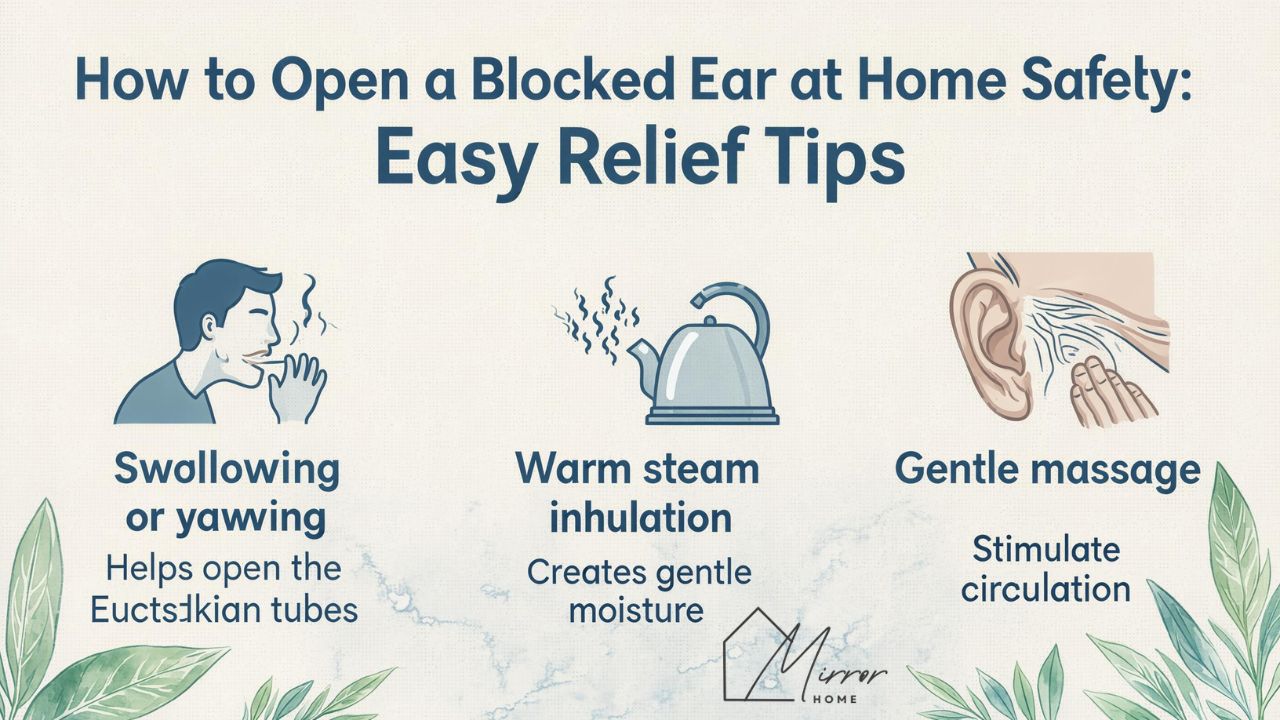
1. Try Swallowing, Yawning, or Chewing
This works best when your blocked ear is caused by pressure. For example, after a flight, elevator ride, mountain drive, or sinus congestion.
Try:
- Swallowing slowly
- Yawning a few times
- Chewing sugar-free gum
- Sipping water
These actions help the Eustachian tube open and balance pressure.
2. Use Steam for Congestion
If your ear feels blocked during a cold, blocked nose, or allergy flare, steam may ease nasal congestion.
You can:
- Take a warm shower
- Sit in a steamy bathroom
- Use a bowl of warm steam carefully
Do not place your face too close to hot water. Steam helps the nose and throat area, not the ear canal directly.
3. Use Warm Compresses
A warm compress may help if the ear feels full or uncomfortable because of congestion.
Place a warm cloth near the affected ear for 10–15 minutes. It should feel warm, not hot.
4. Soften Earwax With Safe Drops
If wax is likely the issue, softening it can help. NHS advice suggests 2–3 drops of olive or almond oil, while lying with the affected ear upward, then staying there for 5–10 minutes. It says this can be repeated 3–4 times daily for 3–5 days.
Do not use almond oil if you are allergic to almonds.
This is one of the most common safe methods for how to open a blocked ear at home, but it is not right for everyone.
Avoid drops if you have:
- Ear pain
- Fluid or pus from the ear
- A known perforated eardrum
- Recent ear surgery
- Ear tubes
- Severe dizziness
Mayo Clinic warns that the ear canal and eardrum are delicate, and people should not insert cotton swabs or objects into the ear canal.
What Not to Put in Your Ear
This part matters a lot. Many blocked ears become worse because people try to “dig out” wax.
Avoid:
- Cotton swabs inside the ear canal
- Hair pins
- Keys
- Toothpicks
- Ear candles
- Random suction tools
- Strong water pressure
The American Academy of Otolaryngology warns that cotton swabs and sharp objects can injure the ear canal, damage the eardrum, or cause hearing problems, dizziness, and ringing.
Ear candling is also unsafe and not reliable. The American Academy of Audiology says ear candling does not work, and cotton swabs often push wax too far down the canal.
Earwax Blockage vs Ear Pressure
It helps to know the difference before trying home care.
| Symptom | More likely earwax | More likely pressure/congestion |
|---|---|---|
| Muffled hearing | Yes | Yes |
| Full feeling | Yes | Yes |
| Started after cold/allergy | Sometimes | Very likely |
| Started after swimming | Possible | Possible water trapped |
| Popping/crackling | Less common | Common |
| Ear pain | Possible | Possible infection |
| Ringing | Possible | Possible |
| Improves when yawning | Less likely | More likely |
| If you are unsure, keep the method gentle. Never push anything into the ear. |
Best Home Methods for Different Causes
If the Cause Is Earwax
Use softening drops or oil for a few days. Be patient. Wax often softens gradually.
Do not keep adding drops for weeks without improvement. NHS Inform says to contact a GP practice if symptoms worry you or ear drops have not helped after one week.
If the Cause Is Air Pressure
Try yawning, swallowing, chewing gum, or gently breathing out while pinching your nose and keeping your mouth closed. Do this gently. Do not force it.
If the Cause Is a Cold or Sinus Congestion
Focus on nasal comfort:
- Drink fluids
- Use steam
- Rest
- Try saline nasal spray
- Avoid smoke and dust
The ear may improve as nasal swelling settles.
If the Cause Is Water in the Ear
Tilt your head toward the blocked side. Gently pull the outer ear backward and upward. You can also lie on the affected side for a few minutes.
Do not insert cotton swabs to dry the ear.
When Home Care Is Not Enough
You should get medical help if you have:
- Severe ear pain
- Sudden hearing loss
- Blood or discharge
- Fever
- Dizziness or balance problems
- Ringing that is new or severe
- Symptoms after injury
- A blocked ear lasting more than a week
- Diabetes or a weak immune system
- History of eardrum perforation or ear surgery
Mayo Clinic notes that wax removal is safest when done by a healthcare professional, especially if there is pain, drainage, past surgery, or a hole in the eardrum.
Prevention Tips for Blocked Ears
You cannot prevent every blocked ear, but you can reduce the risk.
Try these habits:
- Clean only the outer ear with a soft cloth
- Avoid cotton swabs inside the canal
- Treat allergies early
- Dry ears gently after bathing
- Use ear protection in dusty areas
- Do not over-clean your ears
- Ask a clinician before using wax drops regularly
Earwax is not dirt. It protects the ear canal. The goal is not to remove all wax, only to manage buildup when it causes symptoms.
FAQs
How to open a blocked ear at home quickly?
Try swallowing, yawning, chewing gum, steam, or a warm compress first. If wax is likely, softening drops may help over several days.
Is it safe to use cotton swabs for a blocked ear?
No. Cotton swabs can push wax deeper and may injure the ear canal or eardrum.
How long does a blocked ear take to clear?
Pressure-related blockage may clear within minutes or hours. Earwax may take several days of softening. See a doctor if it lasts more than a week.
Can olive oil unblock earwax?
Olive oil may soften earwax, which can help it move out naturally. Do not use it if you have pain, discharge, ear tubes, or a perforated eardrum.
Why does my ear feel blocked but no wax comes out?
It may be pressure, congestion, fluid behind the eardrum, allergies, or infection rather than wax.
Can a blocked ear be serious?
Yes, sometimes. Sudden hearing loss, severe pain, dizziness, fever, or discharge should be checked quickly.
Should I use hydrogen peroxide?
Some over-the-counter wax-softening products use peroxide-based ingredients, but they are not suitable for everyone. Avoid them if you have pain, discharge, ear surgery history, or eardrum problems.
What is the safest method for how to open a blocked ear at home?
The safest method is to match the cause: gentle pressure-relief actions for pressure, steam for congestion, and wax-softening drops only when wax is likely and there are no warning signs.
Conclusion
A blocked ear can feel annoying, worrying, and even exhausting when sounds become muffled. The good news is that many mild cases improve with gentle home care.
The safest approach to how to open a blocked ear at home is simple: do not poke, dig, candle, or force anything. Try swallowing, yawning, steam, warm compresses, or safe wax-softening drops when appropriate.
And trust your body. If there is pain, discharge, dizziness, sudden hearing loss, or no improvement after several days, get medical help. Your ears are delicate, and careful treatment is always better than a risky quick fix.