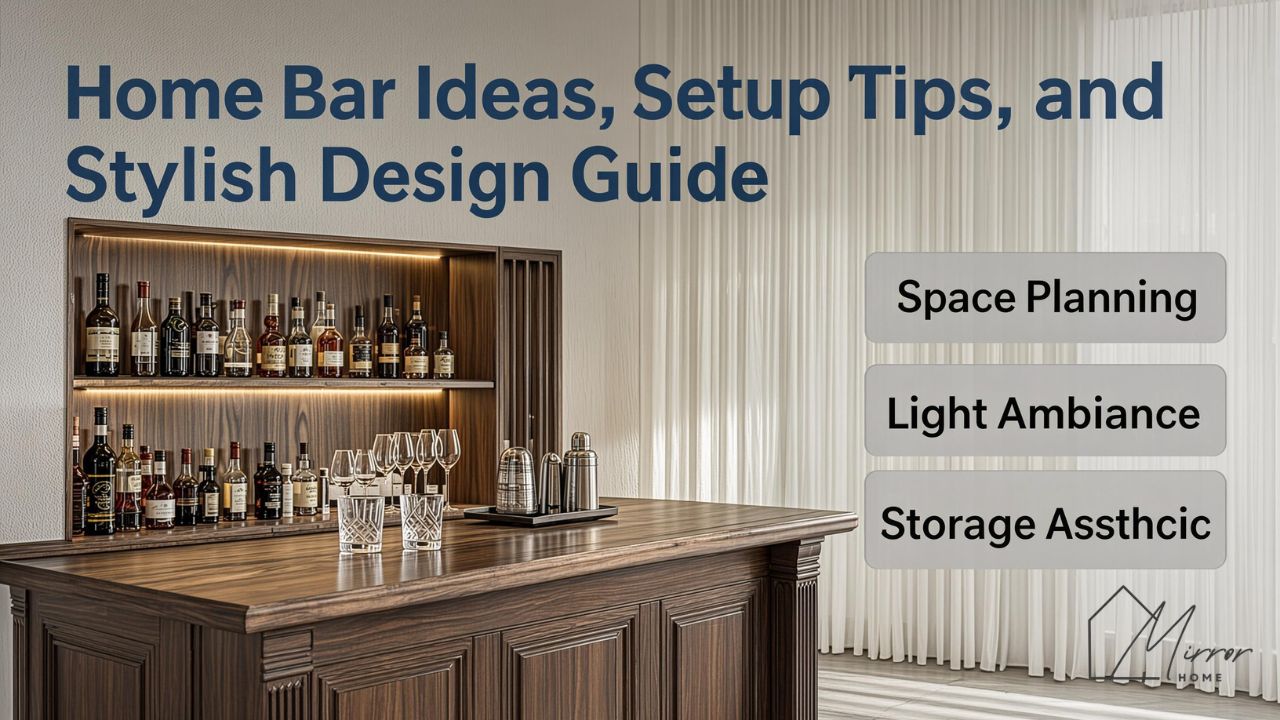
When done right, a home bar becomes more than a place to pour a drink. It turns into a conversation starter, a design statement, and one of those corners of the house people remember long after they leave.
Some people picture a full basement setup with stools, glass racks, and glowing shelves. Others just want a neat bar cart tucked into the dining room. In reality, both can work beautifully. The best part is that a home bar can fit almost any budget, layout, or style.
That is why this topic matters. A well-planned bar area helps you host more comfortably, stay organized, and make better use of awkward or empty space. It can also add personality to your home in a way that feels warm rather than overdone.
What Is a Home Bar and Why Do People Want One?
A home bar is a dedicated area in the house used to store, prepare, and serve drinks. That area can be as simple as a rolling cart with a few bottles and glasses, or as elaborate as a built-in wet bar with custom cabinets, a sink, and under-counter refrigeration.
People love the idea for practical reasons, but also for emotional ones. It makes gatherings feel more intentional. It adds a little ritual to weekends. It can even make a quiet night at home feel special. On the other hand, many homeowners also like that it gives them a stylish way to organize bottles, mixers, glassware, and serving pieces instead of scattering them across the kitchen.
A good bar setup also supports the rise of at-home entertaining. Many people now prefer hosting friends at home rather than going out for every occasion. A dedicated spot for drinks helps the event flow more smoothly, whether you are serving mocktails, coffee cocktails, wine, or sparkling water with garnishes.
Why it appeals to modern homeowners
There are a few reasons this idea keeps showing up in design magazines and renovation plans:
- It makes hosting easier
- It fills an unused corner or wall
- It adds visual interest to a room
- It keeps bottles and glassware organized
- It can reflect your style in a bold, personal way
That said, not every bar area needs to look dramatic. Sometimes the most successful version is the one that feels effortless and fits the rest of the house.
How to Choose the Best Spot for a Home Bar
Before buying shelves, stools, or a cabinet, pick the right location. The best spot depends on how often you entertain, how much room you have, and whether the area needs plumbing or power.
Dining room corner
A dining room bar feels natural because drinks are already tied to meals and gatherings. A sideboard, cabinet, or floating shelves can work well here. This option is especially good for homes without extra square footage.
Living room wall
A living room bar keeps drinks close to where people gather. This setup works well with bar carts, console tables, or built-in millwork. However, you will want to keep the styling tidy so the space still feels relaxed rather than cluttered.
Kitchen extension
If you already have kitchen storage nearby, adding a bar nook can be smart and efficient. This might include a beverage fridge, wine rack, glass storage, and a small prep surface. For many families, this is the most useful place for a home bar because it supports both parties and daily use.
Basement or game room
This is the dream option for many homeowners. A basement bar can feel immersive, cozy, and separate from the main living areas. It is also ideal if you want bar stools, a TV, a sink, or a larger setup without crowding other rooms.
Unused nook or hallway end
Some of the best bar spaces come from awkward architecture. A dead corner, under-stair area, alcove, or extra wall niche can become a compact beverage station with shelves and a small cabinet.
Questions to ask before choosing a spot
| Question | Why It Matters |
|---|---|
| Is there enough surface space? | You need room to pour, mix, and serve |
| Is storage nearby? | Bottles, tools, and glasses add up fast |
| Will it interrupt foot traffic? | Guests should gather comfortably |
| Do you need electricity or plumbing? | Important for fridges, ice makers, or sinks |
| Does it suit the mood of the room? | The design should feel connected |
Must-Have Elements of a Functional Home Bar
Style matters, but function comes first. A beautiful setup that is frustrating to use will lose its charm quickly.
Prep surface
You need a stable surface for pouring drinks, slicing citrus, or setting out snacks. Even a small cabinet top can work, as long as it is practical and easy to clean.
Bottle storage
Think about how many bottles you actually keep. Some people need room for six favorites. Others want wine, spirits, syrups, bitters, and nonalcoholic options. Store daily-use bottles where you can reach them, and place extras below.
Glassware zone
Keep glassware close to the serving area. This includes wine glasses, tumblers, coupe glasses, or simple everyday drinkware. Open shelves look attractive, but closed cabinets protect against dust.
Tool storage
Shakers, strainers, muddlers, jiggers, bottle openers, napkins, and coasters need a home. A drawer organizer or tray prevents the area from turning messy.
Lighting
Lighting changes everything. Soft wall sconces, under-shelf LED strips, or a small pendant can make the bar feel inviting instead of forgotten.
Optional upgrades
Depending on your budget and space, you may want:
- Beverage fridge
- Wine cooler
- Ice maker
- Sink
- Floating shelves
- Mirror backsplash
- Lockable cabinet
- Built-in trash pullout
Home Bar Styles That Work in Real Homes
The biggest mistake people make is copying a photo without thinking about their actual house. A bar should match the tone of the room around it.
Modern and minimal
This style uses clean lines, sleek hardware, simple shelves, and restrained color palettes. Matte black, walnut, white oak, and stone surfaces work well here. It looks polished, but it needs discipline. Too many visible bottles can ruin the calm effect.
Classic and timeless
Think darker woods, brass accents, framed art, glass-front cabinets, and traditional barware. This look feels rich and collected. It is a great fit for older homes, formal dining rooms, and libraries.
Rustic and warm
A rustic bar leans on reclaimed wood, open shelving, warm lighting, and textured finishes. It can feel casual, welcoming, and less precious. However, balance is important so it does not become visually heavy.
Glam and dramatic
If you love statement interiors, go bold with mirrored backsplashes, jewel tones, moody paint, fluted panels, or metallic finishes. This kind of home bar can feel luxurious, especially in a powder room lounge area or basement entertainment zone.
Coastal or airy
This look favors pale woods, soft blues, woven accents, light stone, and plenty of openness. It is perfect for homes that feel relaxed and bright.
Industrial
Metal shelving, brick, dark finishes, Edison bulbs, and concrete-inspired surfaces give an edgy look. This style works best when softened with wood or warm light so it still feels livable.
Small Space Home Bar Ideas
Not everyone has a basement or spare room. The good news is that a small setup can still feel intentional and stylish.
Use a bar cart
A bar cart is one of the easiest ways to start. It is flexible, easy to move, and works well in apartments. Style the top with your most-used bottles and glasses, then keep extra stock on the lower shelf.
Convert a cabinet
An old dresser, buffet, or console can become a compact bar station. Add a tray, a lamp, and a few shelves above it. This gives you closed storage, which is a huge advantage in smaller homes.
Go vertical
When floor space is tight, use the wall. Floating shelves, wall-mounted racks, and hanging stemware holders add function without taking up much room.
Create a hidden setup
A folding desk, armoire, or cabinet with doors can hide the bar entirely when not in use. This is a smart option if you want the room to stay visually clean.
Tuck it into the kitchen
A few feet of countertop plus upper shelves can be enough. Add a small fridge or wine rack below, and suddenly the corner becomes much more useful.
Smart small-space tips
- Limit the number of bottles on display
- Choose dual-purpose furniture
- Use trays to group items
- Keep colors consistent
- Leave some empty space so it does not feel crowded
Storage, Shelving, and Organization Tips
A great bar is not just attractive on day one. It stays easy to use week after week.
Store by category
Group items into simple categories:
- Spirits
- Wine
- Mixers
- Garnishes
- Glassware
- Tools
- Napkins and accessories
This sounds basic, but it makes hosting much easier. When guests ask for something, you know exactly where it is.
Mix open and closed storage
Open shelves are ideal for attractive bottles, books, and glassware. Closed cabinets are better for bulky supplies, backup bottles, cleaning items, and anything less pretty.
Use trays and bins
A tray instantly makes the space look more organized. Use one for cocktail tools, one for mixers, and another for decorative items like candles or coasters.
Think about height and reach
Heavy bottles should sit lower. Everyday glasses should be easy to grab. Items you rarely use can go higher up. This is especially important for a family-friendly home bar setup where safety matters.
Do not over-display
This is where many bars start looking chaotic. Not every bottle belongs on the shelf. Rotate seasonally if you like styling, but keep the visible selection curated.
Seating, Lighting, and Decor Choices
These details shape the mood more than people expect.
Seating
If you have counter space, bar stools can make the area feel social. Choose stools with the right seat height and enough clearance underneath. In smaller rooms, even one stool can add charm without crowding the space.
Lighting
Layered lighting works best. Consider:
- A small table lamp for warmth
- Under-shelf lighting for visibility
- A pendant for visual focus
- Wall sconces for symmetry
Warm lighting is usually more flattering than bright white light, especially in the evening.
Decor
Decor should support the setup, not overwhelm it. A few good choices include:
- Framed vintage drink prints
- A mirror to reflect light
- Small plants or greenery
- A textured runner or tray
- A statement ice bucket
- Stylish books or cocktail guides
Color palette ideas
| Style | Good Colors |
|---|---|
| Modern | Black, white, walnut, taupe |
| Moody | Deep green, navy, charcoal, brass |
| Airy | Oak, white, pale blue, sand |
| Classic | Espresso, cream, gold, burgundy |
Tools and Accessories Worth Buying
You do not need a professional bartender kit with twenty pieces. Start with the tools that actually get used.
Core essentials
- Cocktail shaker
- Jigger
- Strainer
- Muddler
- Bar spoon
- Bottle opener
- Corkscrew
- Ice bucket
- Coasters
- Napkins
Useful extras
- Citrus press
- Cutting board
- Garnish picks
- Decanters
- Wine stopper
- Water carafe
- Small trash bowl for peels and stirrers
Glassware basics
You can build slowly, but most people do well with:
- Rocks glasses
- Highball glasses
- Wine glasses
- Champagne flutes or coupes
That said, do not buy specialty glassware just because it looks impressive. Start with what suits the drinks you actually serve.
Common Home Bar Mistakes to Avoid
Even a beautiful idea can go wrong in the details.
Choosing style over function
A bar may look stunning online, but if it has no prep area or storage, it will frustrate you fast.
Buying too much at once
It is tempting to stock every bottle and accessory immediately. In reality, most people use a short list of favorites. Begin there, then expand naturally.
Ignoring scale
Oversized stools, deep cabinets, or bulky shelves can overwhelm a small room. Measure carefully before buying.
Poor lighting
A dim, shadowy setup looks flat and feels inconvenient. Light should help both ambiance and use.
Too much clutter
A bar area is easy to overcrowd. Leave breathing room. The setup should look collected, not crowded.
Forgetting nonalcoholic options
A thoughtful bar includes sparkling water, tonic, juices, syrups, fresh garnishes, and nice glassware for everyone. This makes your home bar more welcoming and current.
How to Create a Home Bar on Different Budgets
You do not need custom cabinetry to make this work.
Budget-friendly setup
A simple starter version might include:
- A bar cart or secondhand cabinet
- A basic tool set
- Four to six glasses
- A small tray
- A lamp or framed print
This approach can still look polished if the styling is intentional.
Mid-range setup
At this level, you might add:
- Better furniture with storage
- Floating shelves
- Nicer lighting
- A curated selection of bottles
- Decorative accessories
- A compact wine fridge
This is often the sweet spot for homeowners who want function and style without a full renovation.
Higher-end setup
A premium setup may include:
- Custom millwork
- Stone countertop
- Built-in fridge or wine cooler
- Sink and plumbing
- Designer lighting
- Backsplash tile
- Integrated glass storage
Sample budget comparison
| Budget Level | What You Can Expect |
|---|---|
| Low | Cart, basic tools, simple styling |
| Mid | Cabinet, shelves, lighting, curated accessories |
| High | Built-ins, appliances, plumbing, custom finishes |
How to Make Your Home Bar Feel Personal
The most memorable bars are not always the most expensive. They are the ones that reflect the people living there.
Display a bottle from a special trip. Frame a menu from a favorite restaurant. Use a tray you inherited. Mix practical items with pieces that tell a story. A home bar feels better when it has some soul.
You can also shape it around how you live. Maybe yours is really a coffee-and-cocktail station. Maybe it is built for mocktails and entertaining family. Maybe it is more about wine and good glassware than mixing drinks. All of that still counts.
That is the beauty of it. There is no single correct version. The smartest design is the one you will actually use.
FAQ
What is the best place to put a home bar?
The best place depends on your layout, but dining rooms, living room corners, kitchens, and basements are common choices. Pick a spot with enough surface area, good access, and storage potential.
How much space do I need for a home bar?
You need far less than most people think. A small cart or cabinet can work in a tight apartment, while a built-in setup needs more room for seating, storage, and movement.
Can a home bar work in a small apartment?
Yes, absolutely. A bar cart, slim console, floating shelves, or a hidden cabinet can create a stylish setup without using much floor space.
What should I keep in a basic home bar?
Start with a few glasses, a shaker, a jigger, a bottle opener, napkins, coasters, ice storage, and the drinks you actually enjoy serving.
Is a home bar only for alcohol?
No. Many people use the space for mocktails, sparkling water, coffee cocktails, tea service, or a mix of everything. A modern bar area can be inclusive and flexible.
How do I decorate a home bar without making it look cluttered?
Use trays, limit what stays on display, keep a consistent color palette, and mix practical items with just a few decorative accents like art, greenery, or a lamp.
Are built-in home bars worth it?
They can be worth it if you entertain often and want a permanent feature. However, a freestanding cabinet or cart is usually more budget-friendly and still looks great.
What lighting works best for a home bar?
Warm layered lighting works best. Try a table lamp, under-shelf lighting, a pendant, or sconces to create both visibility and atmosphere.
Conclusion
A good home bar is not about showing off. It is about making your space more enjoyable, more useful, and more welcoming. Whether you choose a simple cart in the corner or a custom-built statement wall, the right setup should feel natural in your home and easy in daily life.
Start with the space you have, buy only what supports the way you actually host, and let the design grow over time. That approach usually creates a bar area that feels stylish, personal, and genuinely lived in.