Introduction
There’s something oddly comforting about a chair that moves gently back and forth—almost like it’s designed to calm your nerves after a long day. That’s exactly where a glider chair stands out. Unlike traditional rocking chairs, it offers a smoother, quieter motion that feels more controlled and modern.
If you’ve ever struggled to relax after work, soothe a baby, or simply find a cozy reading spot, this topic matters more than you think. The right seating can literally change how you unwind, sleep, or even bond with your child. And yet, most people underestimate how much difference a well-chosen chair can make.
In this guide, we’ll break down everything—from types and features to buying mistakes people keep making—so you can choose a chair that actually improves your daily life, not just your room’s aesthetics.
What Is a Glider Chair?
A glider chair is a type of seat that moves in a smooth, horizontal back-and-forth motion using a fixed track mechanism. Unlike rocking chairs that tilt on curved legs, this chair stays stable on the floor while the seat glides.
This makes it:
- Safer (especially around kids)
- More stable on modern flooring
- Less noisy over time
The mechanism is usually mounted on a base, which allows controlled motion. In simple terms, it mimics rocking—but without the unpredictability.
Glider Chair vs Rocking Chair: Key Differences
People often confuse these two, but they’re not interchangeable.
| Feature | Glider Chair | Rocking Chair |
|---|---|---|
| Motion | Linear glide | Arc rocking |
| Stability | Fixed base | Moves on curved legs |
| Noise | Usually silent | Can creak |
| Safety | Higher | Lower |
| Modern appeal | High | Traditional |
Here’s the blunt truth: rocking chairs are nostalgic, but gliders are practical. If you’re buying for comfort or functionality, the glider wins.
Types of Glider Chairs You Should Know
Nursery Glider Chairs
These are specifically designed for parents. They often come with:
- Extra cushioning
- Armrests at feeding height
- Matching ottomans
They’re built for long sitting sessions—especially during late-night baby care.
Reclining Glider Chairs
A step above standard options. These allow you to lean back and even nap.
Best for:
- Living rooms
- Elderly users
- Relaxation-focused setups
Swivel Glider Chairs
These combine gliding with 360-degree rotation.
Why it matters:
- More flexibility
- Better for multitasking spaces
Outdoor Glider Chairs
Made from weather-resistant materials like metal or treated wood.
However, don’t expect the same comfort level as indoor options.
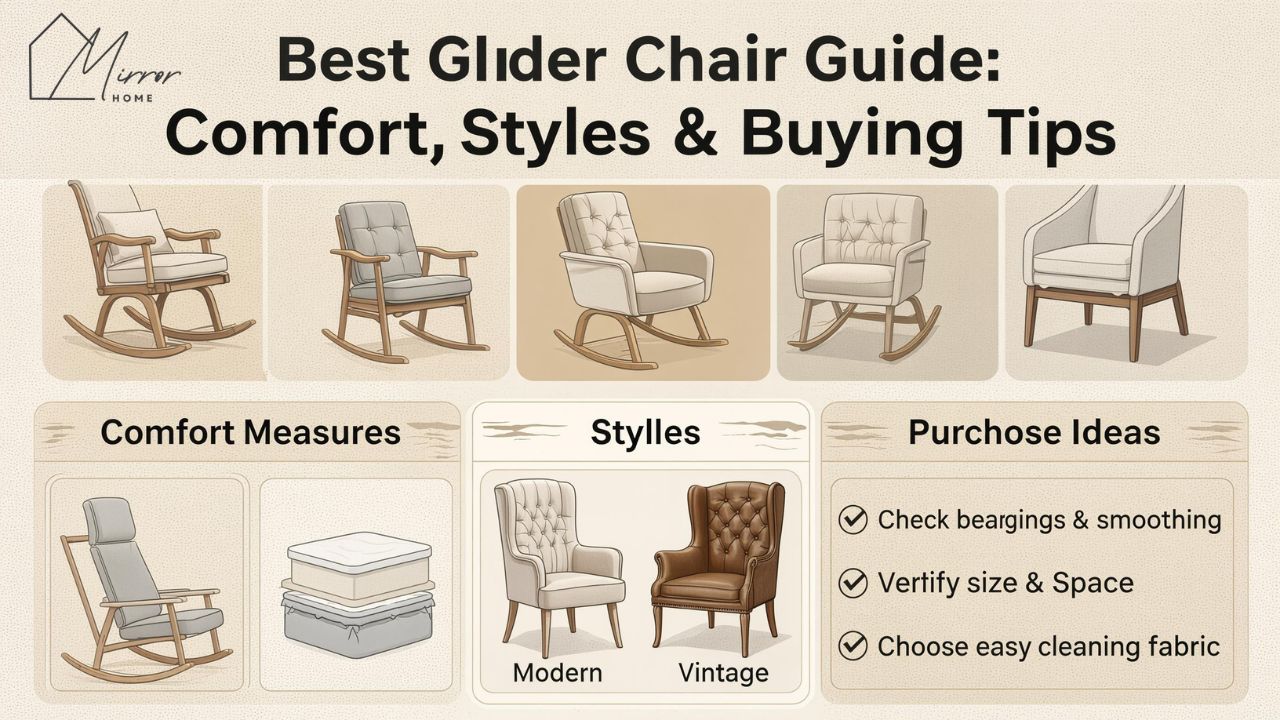
Key Features to Look for in a Glider Chair
Let’s cut the fluff. Most people buy based on looks—and regret it later. Here’s what actually matters:
1. Cushion Density
Soft doesn’t always mean good. You want high-density foam that doesn’t flatten within months.
2. Frame Material
- Solid wood → Durable but expensive
- Metal → Strong but less aesthetic
- Engineered wood → Budget-friendly but less durable
3. Glide Mechanism
Cheap models develop noise quickly. Look for ball-bearing systems.
4. Armrest Height
Critical for nursing mothers or long reading sessions.
5. Fabric Type
- Polyester → Durable
- Leather → Premium feel
- Cotton → Comfortable but stains easily
Benefits of Using a Glider Chair
1. Stress Reduction
The rhythmic motion has a calming psychological effect. Studies show repetitive motion can reduce anxiety levels.
2. Better Sleep
Many people unknowingly fall asleep faster while gliding. That’s not coincidence—it’s neurological relaxation.
3. Ideal for Parents
Feeding, soothing, and bonding become easier.
4. Joint-Friendly
Unlike rigid chairs, it reduces pressure on knees and lower back.
Best Places to Use a Glider Chair
Nursery Room
This is the most common use. And honestly, it’s where the chair proves its real value.
Living Room
Works as a premium comfort chair—especially if paired with a recliner function.
Bedroom Corner
Perfect for reading or winding down before sleep.
Balcony or Patio
Outdoor versions work well, but comfort drops compared to indoor models.
Materials and Build Quality Explained
Let’s be real: most furniture fails because of poor materials, not design.
Wooden Frames
- Strong
- Long-lasting
- Expensive
Metal Frames
- Industrial look
- Very durable
- Can feel cold/uncomfortable
Upholstery Options
- Microfiber → Easy to clean
- Leather → High-end but costly
- Fabric blends → Balanced choice
The smarter move? Prioritize durability over aesthetics.
How to Choose the Right Glider Chair for Your Needs
Step-by-Step Breakdown
- Define your purpose
- Nursery? Relaxation? Decor?
- Measure your space
- Gliders need clearance for motion
- Set a budget
- Cheap = short lifespan
- Test comfort
- If possible, sit before buying
- Check reviews
- Real user feedback matters more than specs
Common Buying Mistakes to Avoid
Here’s where most people mess up:
- Choosing style over comfort
- Ignoring weight capacity
- Buying without testing
- Overlooking maintenance needs
- Going too cheap
Harsh truth: a bad chair becomes useless fast. Spend smart, not less.
Price Range and Value Analysis
| Category | Price Range | What You Get |
|---|---|---|
| Budget | $100–$250 | Basic comfort, lower durability |
| Mid-range | $250–$600 | Better cushioning, stronger build |
| Premium | $600–$1200+ | Recline, swivel, luxury materials |
If you’re serious about long-term use, mid-range is the sweet spot.
Maintenance and Care Tips
Even the best glider chair won’t last if you neglect it.
Basic Care Routine
- Vacuum weekly
- Tighten screws monthly
- Avoid moisture exposure
- Clean spills immediately
Fabric Protection
Use covers if you have kids or pets. Saves you from expensive cleaning later.
Personal Background & Market Insights
The furniture market—especially seating—is evolving fast. Over the last decade, demand for ergonomic and comfort-based furniture has surged.
Why?
- More people working from home
- Increased awareness of posture
- Growing parenting needs
From a business perspective, the glider chair niche sits in a high-conversion category. Buyers are not browsing—they’re solving a problem (comfort, parenting, relaxation).
Market Insight
- Nursery furniture sales have grown steadily year over year
- Mid-range gliders dominate due to value vs cost balance
- Online reviews heavily influence purchasing decisions
Financial Angle
Top furniture brands generate millions annually from seating alone. A well-positioned product in this category can scale fast in eCommerce—if marketed correctly.
FAQs
What is the difference between a glider chair and a rocker?
A glider moves on a fixed track, while a rocker tilts on curved legs. Gliders are more stable and quieter.
Is a glider chair worth it?
Yes—especially if you value comfort, relaxation, or need it for a nursery setup.
How long does a glider chair last?
With proper care, a good-quality chair can last 5–10 years.
Are glider chairs good for back pain?
They can help reduce pressure on joints, but only if they have proper lumbar support.
Can you sleep in a glider chair?
Short naps, yes. But it’s not a replacement for a bed.
What is the best material for a glider chair?
High-density foam with durable upholstery like microfiber or polyester is ideal.
Do glider chairs make noise?
Quality models are silent. Cheap ones often develop noise over time.
Are glider chairs safe for babies?
Yes, safer than rocking chairs due to their stable base.
Conclusion
A glider chair isn’t just another piece of furniture—it’s a functional investment in comfort, routine, and even mental relaxation. Whether you’re a parent dealing with sleepless nights or someone looking for a dedicated comfort zone, the right chair can genuinely improve your daily experience.
But here’s the reality: not all chairs are worth your money. The difference between a great purchase and a regret usually comes down to understanding your needs and avoiding shortcuts.
Choose wisely, focus on quality over hype, and you’ll end up with something that actually delivers—not just something that looks good in photos.